
Leaf diseases South East Queensland
Anthracnose on Fruit Trees: Identification and Treatment
Anthracnose is a fungal disease that causes dark, sunken spots on the leaves, flowers and fruit of trees, and in South East Queensland's warm, wet summers it is one of the most common diseases of mango, avocado and other fruit trees. This guide shows you what anthracnose does, how to identify anthracnose and how to treat anthracnose on fruit trees.
- What it is
- A group of fungi that cause dark, sunken spots on leaves, flowers and fruit
- Scientific name
- Colletotrichum, mainly Colletotrichum gloeosporioides
- Trees affected
- Mango, avocado, citrus, passionfruit, banana and most other tropical fruit trees
- Peak season
- Warm, wet weather, especially during flowering, fruit set and new growth flushes
- How it spreads
- Spores splashed by rain from infected leaves, twigs and fruit
- Key sign
- Dark, sunken spots on fruit, flowers and young leaves, often with pinkish spore masses
- Black spots on your mangoes?
- We'll check the tree and tell you what will help. Book a check →
What is anthracnose?
Anthracnose is a fungal disease that causes dark, sunken spots on the leaves, flowers, twigs and fruit of trees. Business Queensland describes it as one of the most common and serious diseases in horticulture, and in South East Queensland it mostly affects mango, avocado and other fruit trees in warm, wet weather.
- KingdomFungiTrue fungi
- GenusColletotrichumThe main anthracnose fungi on fruit trees
- SpeciesC. gloeosporioidesThe main species on mango and avocado
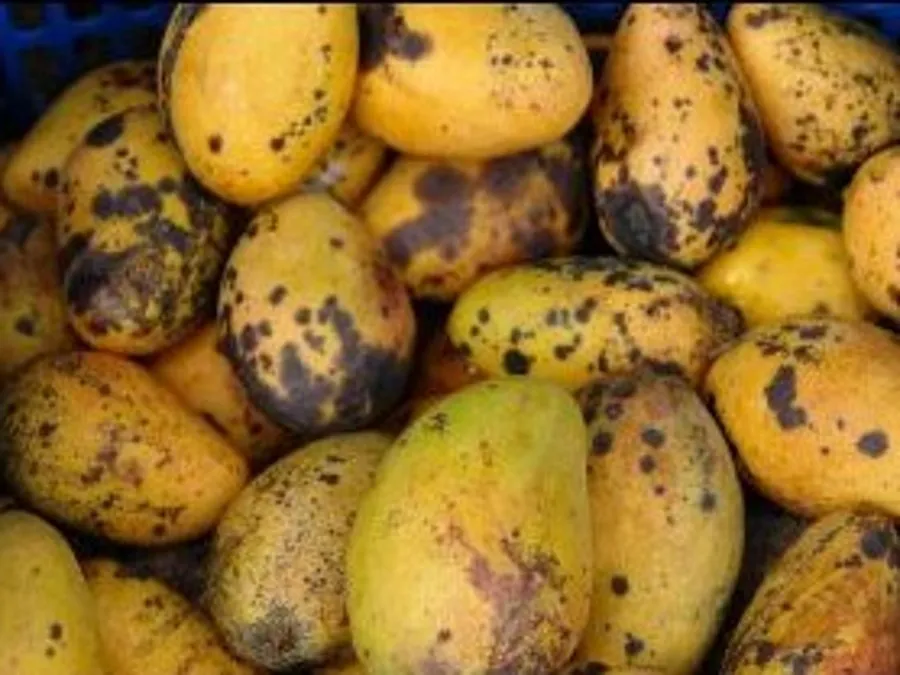
How anthracnose damages a tree
Anthracnose damages a tree mainly through its flowers and fruit. On mango it kills the flowers, causing poor fruit set, and on fruit it causes dark spots and a rot that penetrates deep into the flesh. The fungus can lie dormant in green fruit for many months, so damage often only shows once the fruit ripens. Leaf spots are usually minor, although wet weather can make young leaves fall early.
Source: Business Queensland, Anthracnose.
Anthracnose on different fruit trees
Anthracnose shows differently on each fruit tree, and it goes by different names: blossom blight on mango flowers, pepper spot on avocado and degreening burn on citrus. The fungus is mostly Colletotrichum gloeosporioides, which attacks many tropical fruit trees.
| Tree | What it looks like | What to know |
|---|---|---|
| Mango | Small black spots spreading through the flowers (blossom blight); dark spots on ripening fruit | Blossom blight causes poor fruit set; fruit spots appear as fruit ripens |
| Avocado | Large brown spots on fruit, often around damage; pepper spot of many small, dark, raised spots on fruit and twigs | Infection on the tree shows after picking |
| Citrus | Degreening burn on fruit | Worse with immature picking and heavy nitrogen feeding |
| Passionfruit | Small black dots on dry, parchment-like patches that crack easily | Affects the fruit skin |
| Banana | Spots on ripening fruit, spread from dead banana material | Stays dormant until ripening |
Source: Business Queensland, Anthracnose.
How to identify anthracnose
The main sign of anthracnose is dark, sunken spots, often with a raised rim, on the fruit, flowers and young leaves of fruit trees. In humid weather the spots may grow pinkish spore masses, followed later by black fruiting bodies.
Signs and symptoms of anthracnose
Early signs
- Blackening flowers
Small black spots spreading through mango flower panicles. - Leaf spots
Tan spots with dark brown margins on young leaves after wet weather. - Dark twig spots
Small dark, raised spots on avocado twigs.
Fruit symptoms
- Spots on ripening fruit
Dark spots that darken and sink as the fruit ripens. - Pink spore masses
Pinkish patches on spots in moist weather. - Rotting flesh
Rot running deep into the fruit beneath the spots.
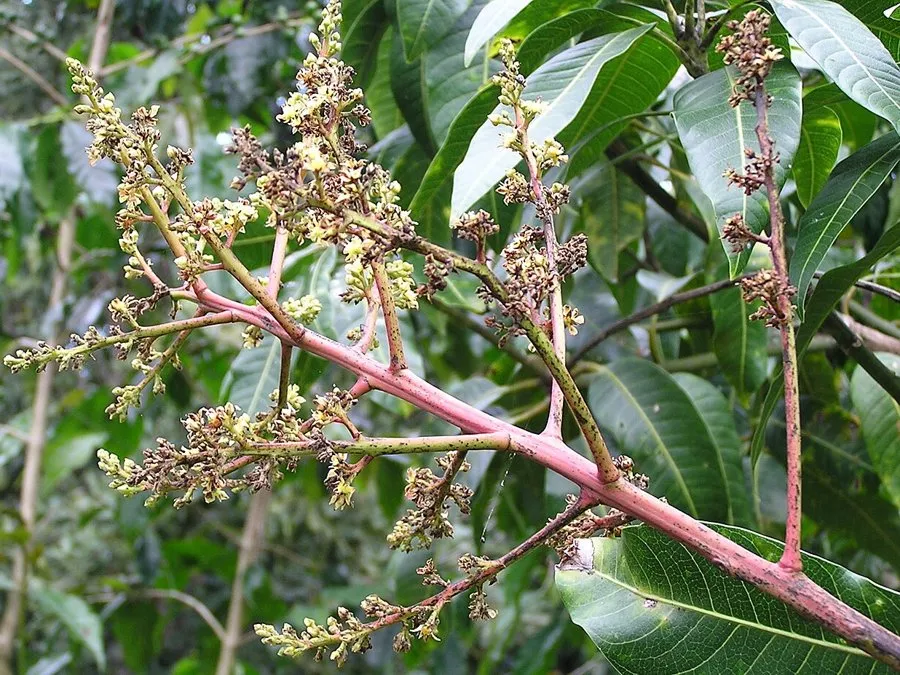
How to diagnose anthracnose
To diagnose anthracnose, look for dark, sunken spots with a raised rim on fruit, flowers and leaves, and for pinkish spore masses on them after humid weather. On mango, check the flowers during wet spells for small black spots that spread. The main look-alike is sooty mould, which is black but sits on the surface and rubs off.
What trees does anthracnose affect?
Anthracnose affects mango, avocado, citrus, passionfruit, banana and most other tropical fruit trees in South East Queensland. Mango and avocado are the backyard trees where it causes the most noticeable damage.
- Mango – blossom blight and fruit spots.
- Avocado – fruit spots and pepper spot on fruit and twigs.
- Citrus – degreening burn on fruit.
- Passionfruit and banana – spots on fruit and skin.
Suspect anthracnose on your fruit tree? We can check the tree and tell you what will help.
Book a checkWhen anthracnose is most active in South East Queensland
In South East Queensland, anthracnose is most active in warm, wet weather, when new growth flushes, flowers and young fruit are most susceptible. Business Queensland names flowering and fruit set, and after harvest, as the critical times for control.
On mango, wet weather during flowering in late winter and spring brings blossom blight, and spots on the fruit show up as it ripens through summer.
Sources: Business Queensland, Anthracnose; Pacific Pests, Pathogens and Weeds, Mango anthracnose.
How anthracnose spreads
Anthracnose spreads in water droplets: rain splashes the spores from infected leaves, twigs, dead wood and fruit onto healthy flowers, leaves and fruit. The fungus carries over on dead leaves and plant debris in the tree and on the ground.
- Rain splash – spores travel in droplets onto nearby leaves, flowers and fruit.
- Dead wood and leaves – dead twigs and fallen leaves keep the fungus from season to season.
- Damaged fruit – spots often start around skin damage from insects.
How to treat anthracnose
Anthracnose is treated by keeping the canopy open, removing dead wood and infected material, and protecting flowers and fruit in wet weather, within an integrated pest management (IPM) approach. Business Queensland notes that leaf spots are generally not serious enough to need treatment; it is the flowers and fruit that need protecting.
Pruning for an open canopy
Most effective
What it is
A cultural control: pruning and shaping the tree so air moves through the canopy.
How it works
Anthracnose needs wet leaves and flowers. An open canopy dries faster after rain, which Business Queensland notes reduces the severity of infection, and it lets light and any sprays reach the inside of the tree.
Effectiveness
The most useful step for a backyard mango or avocado, and it helps fruiting in other ways too.
Tree hygiene
Effective
What it is
A cultural control: removing dead wood, infected fruit and dead leaves from the tree and the ground.
How it works
The fungus survives on dead twigs, leaves and fruit. Business Queensland advises pruning out dead wood before flowering and regularly removing infected fruit and dead leaves caught in the canopy.
Effectiveness
Reduces the spores available to infect each new flush of flowers and fruit.
Controlling fruit-damaging pests
Supporting
What it is
Reducing damage from fruit-spotting bugs and fruit fly.
How it works
Puncture marks in the skin let anthracnose in, and large spots often form around them. Business Queensland includes controlling fruit-spotting bug and fruit fly in its anthracnose program.
Effectiveness
Fewer wounds means fewer places for fruit spots to start.
Balanced nutrition
Supporting
What it is
A cultural control: keeping nutrients, particularly calcium and nitrogen, at adequate levels.
How it works
Business Queensland notes that adequate calcium and nitrogen increase the resistance of fruit to infection, and recommends leaf and soil analysis to keep them right. Over-fertilising with nitrogen, though, worsens degreening burn in citrus.
Effectiveness
A background measure that makes fruit less prone to rotting.
Registered fungicides
Limited
What it is
A chemical control: a fungicide program registered for anthracnose on that crop.
How it works
Commercial growers follow a fungicide program from flowering to fruit set to protect the flowers and young fruit. Any product must be registered for the crop, applied to its label and its withholding period observed.
Effectiveness
Effective in orchards, but full coverage of a large backyard tree through flowering is rarely practical. Pruning and hygiene do more for most home trees.
How to prevent anthracnose
Preventing anthracnose relies on keeping fruit trees open, clean and well nourished, so they dry quickly and carry little of the fungus into each flowering. Wet weather will always bring some anthracnose; good management keeps it from ruining the crop.
- Prune for an open canopy that dries quickly after rain.
- Remove dead wood before flowering, and clear fallen and mummified fruit.
- Avoid wounding fruit, and control fruit-spotting bugs and fruit fly.
- Choose less susceptible varieties when planting new fruit trees.
Anthracnose: common questions
Why do my mangoes have black spots?
Black or dark brown spots on ripening mangoes, sometimes sinking into the fruit with pinkish spore masses, are usually anthracnose. Business Queensland notes that the fungus infects the fruit on the tree but can stay dormant in green fruit for months, only showing as the fruit ripens.
Why are my mango flowers turning black and falling off?
Small black spots spreading through mango flowers until they die and drop is blossom blight, the flower form of anthracnose. It is worst in wet weather during flowering and is a common reason for poor fruit set on backyard mangoes in South East Queensland.
Is anthracnose harmful to the tree?
Rarely to the tree itself. Anthracnose mostly damages flowers and fruit, and the leaf spots are generally not serious enough to need treatment. In wet weather it can cause young leaves to fall early, but established trees recover.
Can I eat mangoes with anthracnose?
The affected parts rot, and Business Queensland notes the rot can penetrate deep into the flesh. Cut away spotted areas generously, and discard fruit that is badly rotted.
How do I stop anthracnose on my mango tree?
Prune to keep the canopy open so it dries quickly after rain, remove dead wood before flowering, and clear infected fruit and dead leaves from the tree and ground. Commercial growers also use a registered fungicide program from flowering to fruit set, which is rarely practical on a large backyard tree.
References
General information, not a diagnosis. Many tree problems look alike, and only an inspection, and sometimes a laboratory test, can confirm what is wrong. Any treatment product must be registered for the use and applied strictly to its label.