
Insects South East Queensland
Bronze Orange Bug: Identification and Treatment
The bronze orange bug is a large native stink bug that sucks sap from citrus trees and squirts a burning, foul-smelling fluid when disturbed, and it is common in South East Queensland backyards, especially near the coast. This guide shows you what the bronze orange bug does, how to identify bronze orange bugs and how to treat bronze orange bug on citrus.
- What it is
- A large native shield bug that sucks sap from citrus
- Scientific name
- Musgraveia sulciventris
- Trees affected
- Citrus and other plants in the citrus family (Rutaceae)
- Peak season
- Most noticeable in the warmer months; nymphs often seen through winter
- How it spreads
- Adults are strong fliers and move between citrus trees
- Key sign
- Large bronze bugs, or green to orange flat nymphs, on citrus shoots and fruit, with a strong smell
- Stink bugs on your citrus?
- We'll check the tree and tell you if it needs treating. Book a check →
What is the bronze orange bug?
The bronze orange bug is a large native stink bug, about 25 mm long, that sucks sap from citrus trees and squirts a burning, foul-smelling fluid when disturbed. It is found in coastal Queensland and New South Wales and is common in gardens near the coast, including across South East Queensland.
- OrderHemipteraThe true bugs, with sucking mouthparts
- FamilyTessaratomidaeThe giant shield bugs
- SpeciesMusgraveia sulciventrisThe bronze orange bug
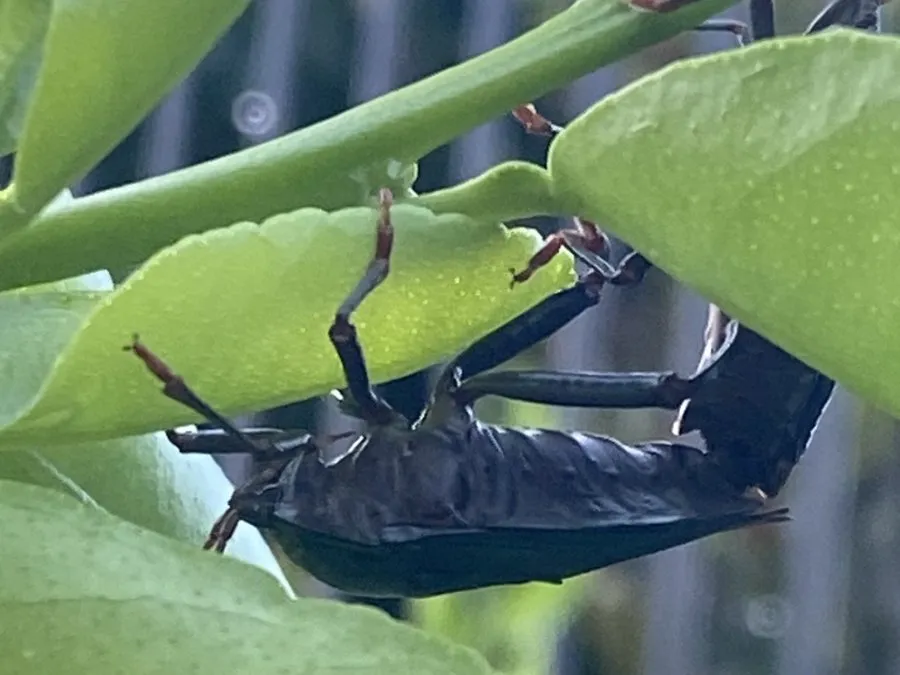
Sources: Australian Museum, Bronze orange bug; Toohey Forest Environmental Education Centre.
How bronze orange bugs damage a tree
Bronze orange bugs damage a tree by piercing young shoots, flowers and fruit and sucking out the sap. In small numbers the damage is minor, but large numbers on a backyard citrus can weaken new shoots and young fruit. The bigger problem for most people is the defensive spray, which makes the tree unpleasant to work on.
Bronze orange bug life stages
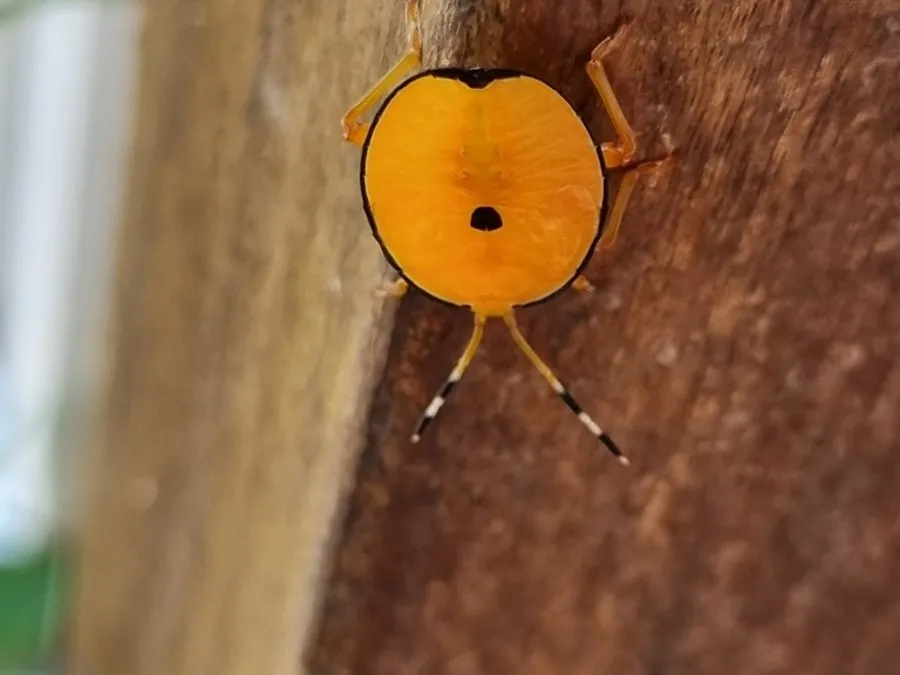
The bronze orange bug looks very different at each stage of its life, which is why the young are often not recognised as the same insect. The flat nymphs are green, yellow or orange, quite unlike the large bronze adults they become.
| Stage | What it looks like | What to know |
|---|---|---|
| Nymph | Flat, green, yellow or orange, with a black spot in the middle of the body | The orange nymphs are the easiest stage to spot and remove; common under leaves in winter |
| Adult | Broad, dark bronze, about 25 mm long, with orange antennae | A strong flier; can squirt its fluid some distance |
Sources: Toohey Forest Environmental Education Centre; Australian Museum; Green Harvest.
How to identify bronze orange bugs
The main sign of bronze orange bugs is large, dark bronze bugs or flat green, yellow or orange nymphs on the shoots, flowers and fruit of a citrus tree, usually with a strong, unpleasant smell. Wilting new shoots and dropped young fruit are the signs of feeding.
Signs and symptoms of bronze orange bug
Early signs
- Flat nymphs
Green, yellow or orange nymphs under leaves, often in winter. - Strong smell
A foul, sharp odour around the tree. - Bugs on new growth
Adults clustered on shoots and flowers.
Heavy infestation
- Wilting shoots
New growth drooping where the bugs have fed. - Fruit drop
Young fruit falling early. - Many bugs
Large numbers through the canopy in the warmer months.
How to diagnose bronze orange bug
To diagnose bronze orange bug, look on citrus shoots and under the leaves for the bugs themselves: broad bronze adults about 25 mm long, or flat nymphs with a black central spot. Do it with eye protection on, as they can spray when disturbed. Other shield bugs and the spined citrus bug also feed on citrus; the black-spotted, flat orange nymph is the bronze orange bug’s giveaway.
What trees does bronze orange bug affect?
The bronze orange bug affects citrus trees and other plants in the citrus family (Rutaceae), and in South East Queensland it is most often seen on lemons and other backyard citrus. It lives in gardens, orchards and forests, and is most common near the coast.
- Lemons, limes and oranges – the most common backyard hosts.
- Mandarins and grapefruit – also citrus, and also attacked.
- Native Rutaceae – other plants in the citrus family.
Suspect bronze orange bugs on your citrus? We can check the tree and tell you if it needs treating.
Book a checkWhen bronze orange bug is most active in South East Queensland
In South East Queensland, bronze orange bugs are most noticeable in the warmer months, when they feed on young shoots, flowers and fruit, often in large numbers. Their nymphs are commonly found on the undersides of leaves during winter, which is the best time to find and remove them before they become adults.
Sources: Australian Museum; Toohey Forest Environmental Education Centre; Green Harvest.
How bronze orange bug spreads
Bronze orange bugs spread as adults, which are strong fliers and move between citrus trees in a neighbourhood. The nymphs stay on the tree where they hatched.
- Flying adults – reach new citrus trees across gardens.
- Neighbouring citrus – one infested tree can supply bugs to others nearby.
How to treat bronze orange bug
Bronze orange bug is treated mainly by removing the bugs by hand, starting with the nymphs in winter, and letting natural predators work, within an integrated pest management (IPM) approach. Protecting your eyes and skin from the spray is part of every treatment.
Hand removal into soapy water
Most effective
What it is
A physical control: knocking the bugs into a bucket of hot, soapy water.
How it works
Gardening advice is consistent that knocking the bugs into hot or soapy water, wearing gloves, works well, and that long-handled tongs keep you further from the spray. The orange nymphs are easiest to see and remove, and they are commonly under the leaves in winter.
Effectiveness
Very effective on backyard citrus, especially when started on the nymphs in winter. Always wear eye protection, gloves and long sleeves.
Natural predators
Supporting
What it is
A biological control: the predators that eat bronze orange bugs.
How it works
Assassin bugs, spiders and birds such as the spangled drongo eat bronze orange bugs. Broad-spectrum sprays kill these predators along with the bugs.
Effectiveness
Helps keep numbers down, but rarely enough alone when a tree is heavily infested.
Insecticides
Last resort
What it is
A chemical control: a product registered for bugs on citrus.
How it works
Any product must be registered for use on citrus, applied to its label, and its withholding period observed before picking fruit.
Effectiveness
Rarely needed on a backyard tree where hand removal is practical, and it kills the predators that help control the bugs.
How to prevent bronze orange bug
Preventing bronze orange bug damage relies on checking citrus trees in winter and removing the nymphs before they grow into adults. A few bugs do little harm; it is large numbers that damage a tree.
- Check citrus in winter, looking under the leaves for flat, orange nymphs.
- Remove nymphs early, before they become strong-flying adults.
- Wear eye protection whenever working on an infested tree.
- Avoid broad-spectrum sprays, which kill assassin bugs and other predators.
Bronze orange bug: common questions
What are the stink bugs on my lemon tree?
Large, broad, dark bronze bugs on a lemon or other citrus tree, often with a strong smell, are bronze orange bugs. Their young, called nymphs, are flat and green, yellow or orange with a black spot in the middle of the body. Both suck sap from the shoots and young fruit.
Is the bronze orange bug spray dangerous?
It can be. When disturbed, bronze orange bugs squirt a foul-smelling fluid that the Australian Museum warns will burn skin and cause great discomfort in the eyes. Wear eye protection, gloves and long sleeves when working around an infested citrus tree, and wash any splashes off straight away.
How do I get rid of bronze orange bugs?
On a small citrus tree, the simplest way is to knock the bugs into a bucket of hot, soapy water, wearing gloves and eye protection. The orange nymph stage is the easiest to spot and remove, and nymphs are commonly found on the undersides of leaves in winter. Long-handled tongs keep you further from the spray.
Do bronze orange bugs damage citrus trees?
They suck sap from young shoots, flowers and fruit, which can make new growth wilt and fruit drop when numbers are high. The Australian Museum describes them as a minor pest in commercial orchards, but large numbers on a backyard citrus can do noticeable damage.
What eats bronze orange bugs?
Assassin bugs, spiders and birds such as the spangled drongo eat bronze orange bugs. Avoiding broad-spectrum sprays keeps these predators around.
References
- Australian Museum. Bronze orange bug. Source
- Toohey Forest Environmental Education Centre (Queensland Department of Education). Bronze-orange bug. Source
- Life-cycle of the bronze orange bug Musgraveia sulciventris (Stål) (Hemiptera: Tessaratomidae). Australian Journal of Zoology (1969). Source
- Green Harvest. Bronze orange bug control, F. Michaels. Source
General information, not a diagnosis. Many tree problems look alike, and only an inspection, and sometimes a laboratory test, can confirm what is wrong. Any treatment product must be registered for the use and applied strictly to its label.