
Other South East Queensland
Possum Damage to Trees: Identification and Prevention
Possums are protected native animals that feed at night on the leaves, shoots, flowers and fruit of trees, and in South East Queensland the common brushtail and common ringtail possums are among the most common causes of chewed, thinning trees in suburban gardens. This guide shows you what possum damage looks like, how to tell possum damage from insects and how to stop possums damaging your trees.
- What it is
- Native, nocturnal marsupials that feed on leaves, flowers and fruit
- Scientific name
- Trichosurus vulpecula and Pseudocheirus peregrinus
- Trees affected
- Eucalypts, fruit trees, flowering ornamentals and new growth on most trees
- Peak season
- Year-round, every night
- How it spreads
- Possums travel over rooftops, fences, powerlines and touching branches
- Key sign
- New shoots, leaves, flowers or fruit eaten overnight, with no insects on the tree by day
- Something eating your tree at night?
- We'll tell you if it's possums and how to protect the tree. Book a check →
What is possum damage?
Possum damage is the chewed shoots, leaves, flowers and fruit left by possums feeding in a tree at night. In South East Queensland it is caused mainly by the common brushtail possum and the common ringtail possum, protected native marsupials that are among the most common native animals in Queensland’s cities and towns.
- ClassMammaliaMarsupials
- OrderDiprotodontiaPossums, koalas and kangaroos
- FamiliesPhalangeridae and PseudocheiridaeBrushtail and ringtail possums
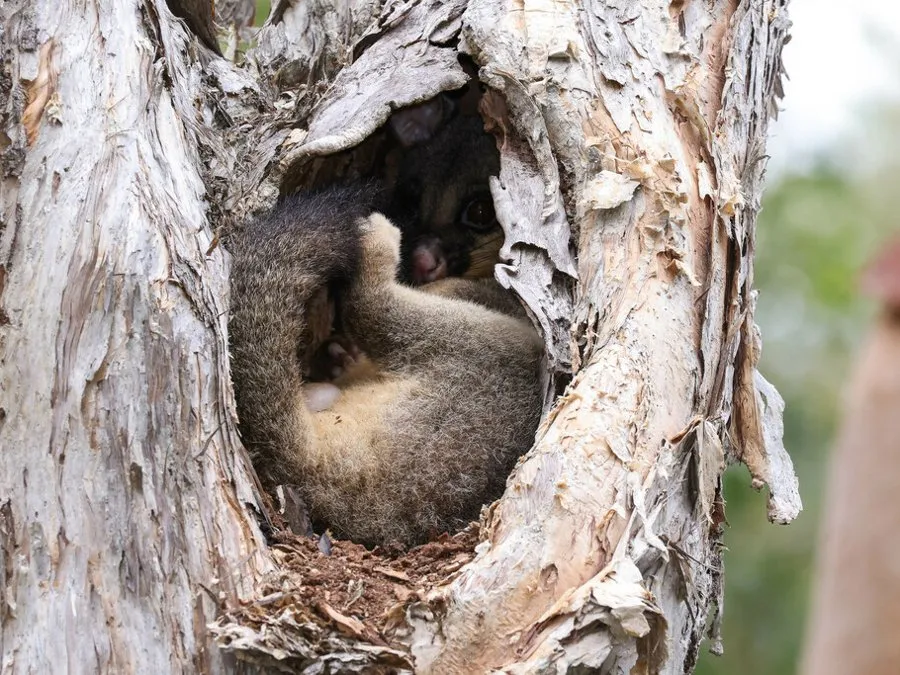
How possums damage a tree
Possums damage a tree by eating its newest growth, flowers and fruit, usually returning to the same tree night after night. An established tree keeps growing, but a young or favoured tree can be kept thin and bare at the tips, and fruit trees can lose most of their crop. Possums also eat mistletoe, which the Queensland Government notes is one of their foods.
Source: Queensland Government, Common brushtail possum.
Types of possums that damage trees
The two possums that damage trees in South East Queensland are the common brushtail and the common ringtail, and they differ in size, diet and where they sleep. A third, the mountain brushtail possum, lives in the wetter, higher parts of the region.
| Possum | What it looks like | What it eats | Where it sleeps |
|---|---|---|---|
| Common brushtail (Trichosurus vulpecula) | Large, 1.5 to 4 kg, silvery grey with pointed ears and a bushy tail | Leaves, flowers, buds and fruit; almost anything in suburbs | Tree hollows, logs and roof spaces |
| Common ringtail (Pseudocheirus peregrinus) | Smaller, under 1 kg, with small round ears and a thin, white-tipped tail it keeps coiled | Mainly eucalypt leaves and fresh shoots, plus flowers and fruit | Nests of sticks called dreys, woven into branches |
| Mountain brushtail (Trichosurus caninus) | Like the common brushtail, with shorter, rounded ears; black in rainforest | Leaves and fruit | Hollows in wetter, higher forests |
Sources: Queensland Government, About possums and Common brushtail possum; Government of South Australia, Living with possums.
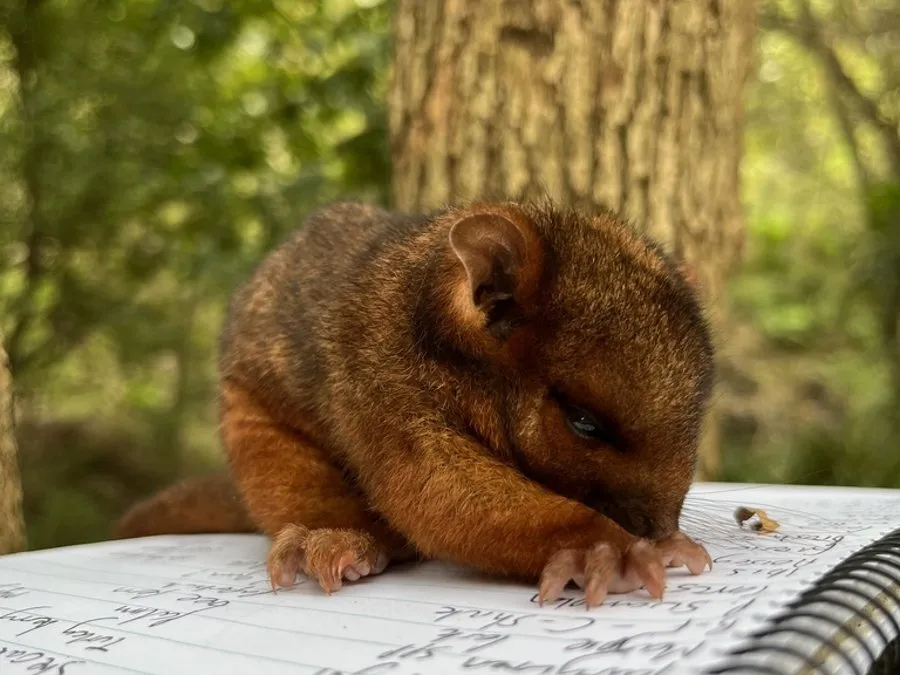
How to identify possum damage
The main sign of possum damage is new shoots, leaves, flowers or fruit that disappear overnight, with no insects on the tree during the day. Because possums sleep by day and feed at night, the damage is usually noticed long before the possums are.
Signs and symptoms of possum damage
Early signs
- Shoots gone overnight
Soft new growth eaten back at the tips. - Fruit and flowers eaten
Half-eaten fruit, and flower buds missing. - Droppings below
Possum droppings under the tree and on paths.
Ongoing browsing
- Thin, bare tips
A canopy that never gets its new growth. - Lost crops
Fruit trees stripped before the fruit ripens. - Nests and noise
Ringtail dreys in the branches, and possums on the roof at night.
How to diagnose possum damage
To diagnose possum damage, check the tree in daylight and again after dark. Insects such as caterpillars, beetles and psyllids can be found on the tree by day, or leave droppings, silk or lerps; possums leave chewed shoots and their own droppings, and can be seen feeding with a torch at night. Rats are the main look-alike on fruit, and the Queensland Government notes that possums are sometimes blamed for damage rats have done.
What trees do possums damage?
Possums damage many trees, but in South East Queensland they most often damage eucalypts, fruit trees, flowering ornamentals and the new growth on almost any tree within reach of their travel routes. Ringtails feed mainly on eucalypt leaves and fresh shoots, while brushtails eat a wider range, especially in suburbs.
- Eucalypts – especially young gums and the soft new growth of older ones.
- Fruit trees – fruit and flowers, often eaten before they ripen.
- Flowering ornamentals – flowers and buds.
- Trees near roofs, fences and powerlines – the trees possums can reach most easily.
Suspect possums are damaging your tree? We can check it and tell you how to protect it.
Book a checkWhen possums are most active in South East Queensland
In South East Queensland, possums are active year-round, coming out after dark every night to feed and returning to their dens before dawn. Brushtail possums breed throughout the year, with most young born between March and November, and as young possums leave their mothers they disperse to find homes of their own.
Source: Queensland Government, Common brushtail possum and About possums.
How possums reach trees
Possums reach trees by travelling over rooftops, through treetops and along powerlines and fences, avoiding the ground where dogs and cars are a risk. That is why the trees they damage most are the ones connected to these routes.
- Touching branches – canopies that meet let possums move from tree to tree.
- Roofs and fences – branches over roofs and fences are an easy way in.
- Powerlines – possums run along lines between poles and trees.
- Dens nearby – a possum in your roof or a nearby hollow feeds close to home.
Source: Queensland Government, About possums.
How to stop possums damaging trees
Possums are stopped from damaging trees by blocking their access, with trunk collars and pruning, and by netting fruit trees. Possums are protected native animals, so the aim is to keep them off the tree rather than remove them.
Tree collars
Most effective
What it is
A physical barrier: a smooth band fitted around the trunk that possums cannot climb past.
How it works
Hume City Council advises a collar at least 60 cm wide, fitted at least 60 cm above the ground, and stresses that the possum must not be able to jump onto the tree from a neighbouring canopy or structure. Fit it so it can be loosened as the trunk grows.
Effectiveness
Very effective on a tree that can only be reached by its trunk. It does nothing if the possum can reach the tree from a roof, fence or another tree.
Pruning access branches
Effective
What it is
A physical control: cutting back branches that touch roofs, fences, powerlines and neighbouring trees.
How it works
Possums travel along these routes rather than over the ground. Pruning a gap between the tree and every route in turns the trunk into the only way up, which is what makes a collar work. Pruning a protected tree may need council approval.
Effectiveness
Essential alongside a collar. Branches near powerlines are best left to a qualified person.
Netting fruit trees
Fruit trees
What it is
A physical barrier: wildlife-safe netting over fruit trees while they fruit.
How it works
Netting keeps possums, and birds and flying foxes, off the fruit. Use fine, wildlife-safe netting, pulled taut and secured at the base, so animals cannot become tangled in it.
Effectiveness
The most reliable way to save a fruit crop, as long as the netting is the wildlife-safe kind.
Nest boxes and alternative food
Supporting
What it is
Providing possums with a nest box as an alternative home, and planting native food plants away from the trees you want to protect.
How it works
The Queensland Government suggests possum-proofing your home and providing a nest box, and South Australia's guidance suggests planting alternative native food plants. A possum with a home and food elsewhere has less reason to target a favourite tree.
Effectiveness
Helps possums and people live together, especially when a brushtail is being excluded from a roof. It will not stop a possum eating a tree it can still reach.
Deterrents
Limited
What it is
Non-toxic natural or commercial deterrents sprayed on foliage.
How it works
Deterrents make leaves and fruit less appealing. They need reapplying regularly and work best combined with collars, pruning and netting.
Effectiveness
Short-lived on their own. Useful as an extra layer on small trees.
Trapping and relocating
Not effective
What it is
Catching a possum and moving it away.
How it works
Possums are protected, and Queensland councils note that trapping and relocating them needs a damage mitigation permit from the state government, and that they cannot be moved more than 25 metres from where they were caught. The Queensland Government notes that if a possum is removed, another soon takes its den.
Effectiveness
Does not solve tree damage, because the possum is replaced or returns. Blocking access to the tree is what works.
How to prevent possum damage
Preventing possum damage relies on keeping possums from reaching the trees you want to protect, while leaving them a place to live. Planning this when planting is far easier than fixing it later.
- Keep gaps between canopies, roofs and fences when planting new trees.
- Fit collars early, on young fruit trees and favourite ornamentals.
- Net fruit trees with wildlife-safe netting at fruiting time.
- Provide a nest box away from the trees you want to protect.
- Remove overnight pet food, which draws possums into the garden.
Possum damage: common questions
What is eating my tree at night?
If new shoots, leaves, flowers or fruit disappear overnight and you cannot find any insects on the tree during the day, possums are the most likely cause. Brushtail and ringtail possums feed at night and spend the day in hollows, roofs or nests. Caterpillars, beetles and other insects can usually be found on the tree, or leave droppings and silk.
Are possums killing my tree?
Rarely on their own. Possums mostly eat the newest growth, flowers and fruit, so an established tree keeps growing, but a young or favoured tree browsed night after night can be kept thin and bare at the tips. If a tree is declining beyond its new growth, look for another cause such as drought, root damage or borers.
How do I stop possums eating my tree?
Stop them reaching it. Fit a collar around the trunk, at least 60 cm wide and at least 60 cm off the ground, and prune back branches that touch roofs, fences, powerlines and other trees, so the possum cannot jump or climb in another way. Wildlife-safe netting protects fruit trees.
Can I relocate a possum in Queensland?
Not without a permit. Possums are protected native animals, and Queensland councils note that trapping and relocating them needs a damage mitigation permit from the state government, and that they cannot be moved more than 25 metres from where they were caught. A removed possum is also soon replaced, because its den is taken by another.
Do tree collars work for possums?
Yes, if the tree can only be reached by its trunk. A smooth collar at least 60 cm wide, fitted at least 60 cm above the ground, stops possums climbing, but it does nothing if the possum can jump in from a roof, fence or neighbouring tree, so pruning access branches matters as much as the collar.
Is it possums or rats eating my fruit?
It can be either. The Queensland Government notes that possums are sometimes wrongly blamed for eating fruit when introduced rats are the real culprits. Their droppings are the easiest way to tell them apart.
References
- Queensland Government. About possums. Source
- Queensland Government. Common brushtail possum. Source
- Government of South Australia, Department for Environment and Water. Living with possums, fact sheet. Source
- Hume City Council. Living with wildlife: possums. Source
- Rockhampton Regional Council. Possums. Source
- Mackay Regional Council. Possums. Source
General information, not a diagnosis. Many tree problems look alike, and only an inspection, and sometimes a laboratory test, can confirm what is wrong. Any treatment product must be registered for the use and applied strictly to its label.