
Insects South East Queensland
Tree Borers: Identification and Treatment
Tree borers are the larvae of beetles and moths that tunnel under the bark and into the wood of trees, and in South East Queensland they mostly attack eucalypts, wattles and fruit trees already weakened by drought or damage. This guide shows you what tree borers do, how to identify borers in a tree and how to treat tree borers.
- What it is
- The larvae of beetles and moths that tunnel through bark and wood
- Scientific name
- Many beetles and moths, including Phoracantha and Endoxyla
- Trees affected
- Eucalypts, wattles, fruit trees such as stone fruit, lychee and persimmon, and pines
- Peak season
- Adults fly and lay eggs mainly in the warm months; larvae feed inside the tree all year
- How it spreads
- Flying adults, and moving infested wood and plants
- Key sign
- Sawdust or frass at the base or on the trunk, with holes, bleeding sap or bark falling away
- Think your tree has borers?
- We'll check how far they've gone and if the tree is safe. Book a check →
What are tree borers?
Tree borers are the larvae of beetles and moths that tunnel through the bark and wood of living trees, feeding as they go. They include longicorn beetles, jewel beetles, wood moths such as the witchetty grub, and tiny bark beetles, and in South East Queensland most attack trees that are already stressed.
- KingdomAnimaliaAnimals
- ClassInsectaThe insects
- OrdersColeoptera and LepidopteraBeetles and moths
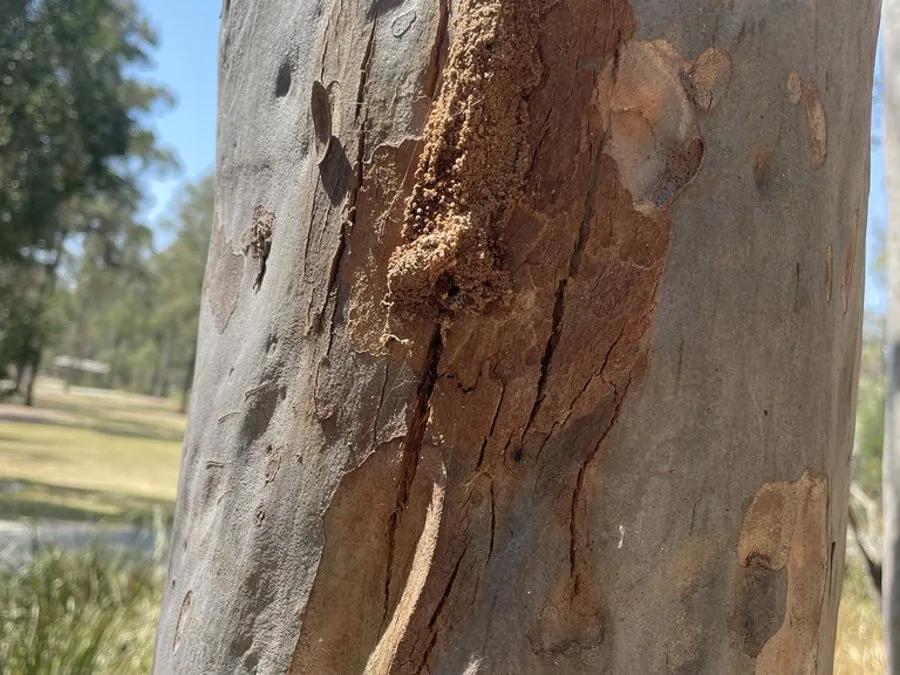
How borers damage a tree
Borers damage a tree by tunnelling under the bark and into the wood, cutting through the tissue that carries water and sugars. Larvae feeding under the bark can ring a branch or a young tree and kill everything above, and tunnels deep in the wood weaken stems so they snap in wind. The wounds also let in fungi, staining and decay.
Types of tree borers
There are two main types of tree borers: beetle borers, such as longicorns, jewel beetles and bark beetles, and moth borers, such as wood moths, the fruit-tree borer and the clearwing borer. Each leaves its own signs, which is the easiest way to tell them apart.
| Borer | Signs | Main trees in SEQ |
|---|---|---|
| Longicorn beetles (Phoracantha and others) | Fine frass at the base, red kino bleeding, bark lifting over galleries, oval holes | Spotted gum, rose gum, blackbutt, grey gum, tallowwood and other eucalypts |
| Giant wood moth (Endoxyla cinereus), the witchetty grub | Coarse frass at the base, a swollen stem around the hole, then a round 3 to 5 cm exit hole | Rose gum, blackbutt, forest red gum, Gympie messmate and other eucalypts over 3 years old |
| Culama wood moths | Webbing and coarse frass over large patches of exposed sapwood; pink larvae in clusters | Spotted gum, rose gum and other eucalypts, usually after longicorns or drought |
| Fruit-tree borer (Maroga melanostigma) | Webbed sawdust on branches or where major branches meet | Wattles and fruit trees, especially stone fruit |
| Clearwing borer (Carmenta chrysophanes) | Frass and webbing in branch crotches; sudden death of part of a branch | Lychee, longan, persimmon, soap tree, figs |
| Stem-girdling weevils | Two rings chewed around a thin branch; the branch tip dies | Lychee |
| Jewel beetles (Buprestidae) | Flat larvae under the bark; D-shaped exit holes | Mainly stressed or dying trees |
| Bark beetles and shot-hole borers | Tiny 1 to 2 mm holes, fine frass, staining around the holes | Pines (five-spined bark beetle); avocado and others (tea shot-hole borer) |
Sources: Business Queensland fact sheets for each borer; NSW DPI, Fruit tree borer. Jewel beetle signs are general to the family.
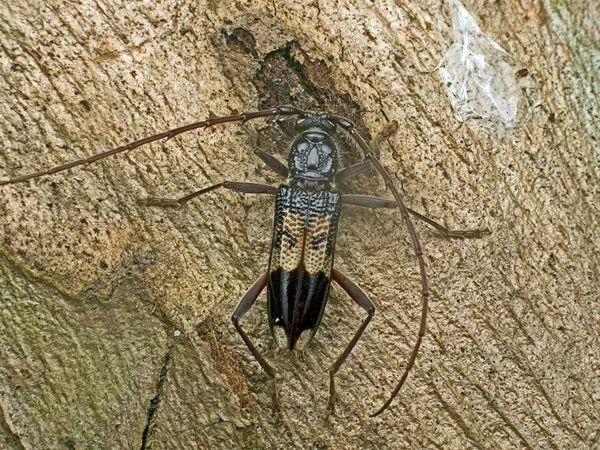
Longicorn beetle
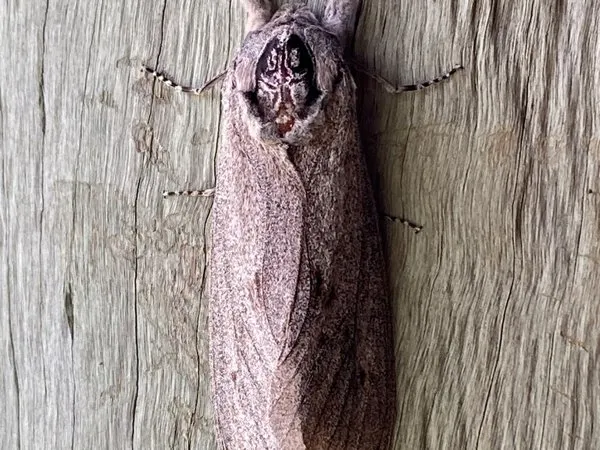
Giant wood moth
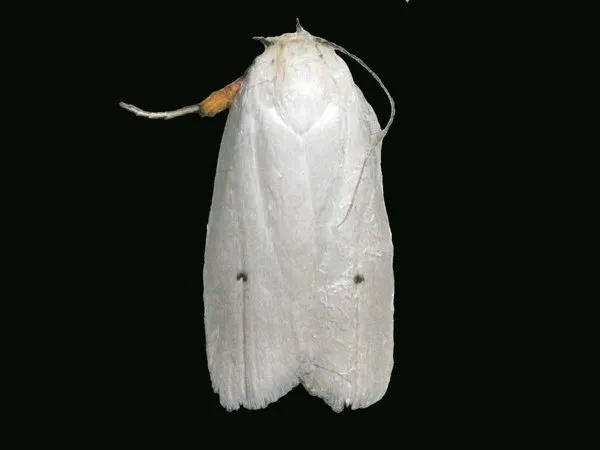
Fruit-tree borer
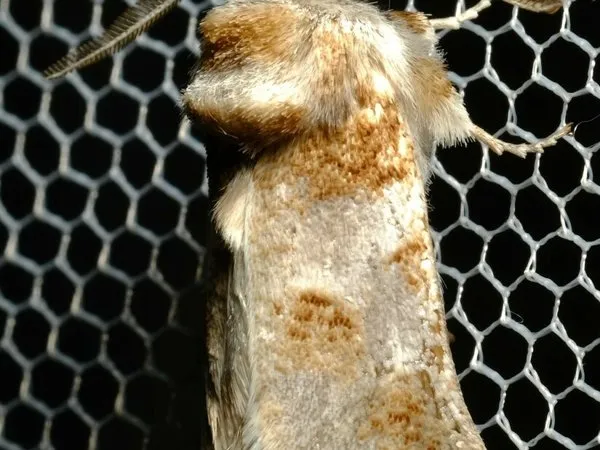
Culama wood moth
How to identify tree borers
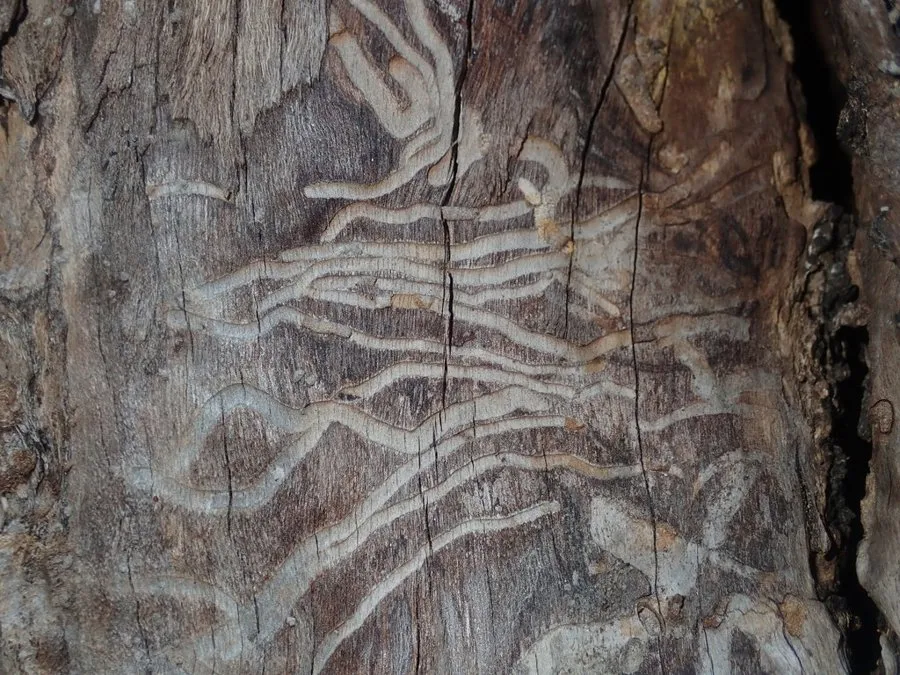
The main sign of tree borers is sawdust-like frass at the base of the tree or caught in the bark, usually with holes, bleeding sap or bark lifting nearby. The borers themselves are rarely seen, because the larvae live inside the tree and most adults fly at night.
Signs and symptoms of tree borers
Early signs
- Sawdust at the base
Fine or coarse frass piled at the foot of the trunk or caught in the bark. - Bleeding sap
Red kino oozing from the bark of a gum tree. - Webbing in branch forks
Silk mixed with sawdust over a hole, from moth borers.
Advanced damage
- Holes in the trunk
Round, oval or tiny pinholes where adults have emerged. - Bark falling away
Patches of bark coming off to show tunnels in the wood beneath. - Dead branches
Branches dying suddenly above a ring of feeding, or snapping in wind.
How to diagnose tree borers
To diagnose tree borers, look closely at the frass and the holes: coarse frass and a large round hole point to a wood moth, fine frass with kino and oval holes to a longicorn beetle, and tiny pinholes with fine powdery frass to bark beetles or shot-hole borers. Fresh frass means the borer is still active. Termites are the main look-alike, but they leave mud, not sawdust. Because borers mostly follow stress, also check the tree for drought, root damage or decay.
What trees do borers attack?
Borers attack a wide range of trees, but in South East Queensland they are most often found in eucalypts, wattles and fruit trees, and in trees weakened by drought, wounds or age. Business Queensland notes that longicorn borers are attracted to freshly cut wood, dying limbs and drought-stressed trees.
| Tree | Common borers | What to know |
|---|---|---|
| Spotted gum, rose gum, blackbutt, grey gum | Longicorns, giant wood moth, Culama | Longicorns favour trees 6 to 20 years old and over 5 cm across |
| Forest red gum, Gympie messmate, Sydney blue gum | Giant wood moth, longicorns | Wood moths attack trees over 3 years old |
| Wattles | Fruit-tree borer | Webbed sawdust at branch forks |
| Stone fruit | Fruit-tree borer | Particularly susceptible, according to NSW DPI |
| Lychee, longan, persimmon | Clearwing borer, stem-girdling weevils | Sudden death of part of a branch |
| Pines | Five-spined bark beetle | Attacks fire-damaged or drought-stressed trees |
| Avocado | Tea shot-hole borer | Present in Queensland and NSW |
Sources: Business Queensland fact sheets; NSW DPI, Fruit tree borer.
Suspect borers in your tree? We can check how far they've gone and whether the tree is safe.
Book a checkWhen borers are most active in South East Queensland
In South East Queensland, borer adults fly and lay their eggs mainly in the warm months, while the larvae keep feeding inside the tree all year. Longicorn beetles lay eggs in spring or when trees are most water-stressed, giant wood moths emerge through summer, typically after heavy rain, and Culama wood moths fly from late spring to early autumn.
Most borers develop slowly: longicorns and giant wood moths take around two years from egg to adult. Bark beetles are the exception, with four or more generations a year in South East Queensland, which lets them build up fast in stressed pines.
Sources: Business Queensland, Longicorn borers, Giant wood moth, Culama wood moth and Five-spined bark beetle.
How tree borers spread
Tree borers spread as flying adults, which seek out stressed trees, fresh wounds and freshly cut wood to lay their eggs. Young giant wood moth larvae also lower themselves on silk threads and drift on the wind.
- Flying adults – most borers fly at night to new trees.
- Stressed and wounded trees – drought, fire damage and pruning wounds attract egg-laying adults.
- Cut wood and prunings – fresh firewood and logs left near trees draw borers in.
- Infested wood and plants – borers travel in firewood, timber and nursery stock, which is how exotic borers such as the polyphagous shot-hole borer move between regions.
How to treat tree borers
Tree borers are treated by reducing the stress that attracts them, removing infested and dying wood, and dealing with borers near the surface, within an integrated pest management (IPM) approach. Insecticides rarely reach larvae deep in the wood, so the tree’s own vigour is the main defence.
Reducing tree stress
Most effective
What it is
A cultural control: watering through drought, mulching the root zone, and fixing compaction, root damage or poor nutrition.
How it works
Most borers target stressed trees. Business Queensland notes that promoting tree vigour is important against longicorns, and that potassium, iron and nitrogen deficiencies were found where some longicorn attacks were more frequent.
Effectiveness
The most effective long-term control, and the only one that addresses why the borers arrived.
Removing infested and dying wood
Effective
What it is
A physical control: cutting out dead, dying and heavily infested limbs, and removing dead trees.
How it works
Borers breed in dying wood, and an infested limb produces the next generation of adults. Business Queensland advises removing and destroying severely affected limbs and removing dead or dying trees so they do not infest healthy ones. For stem-girdling weevils on lychee, the cut is made on the tree side of the ring.
Effectiveness
Reduces the number of borers in and around the tree, and removes limbs that may fail.
Scraping and probing out borers
Small trees only
What it is
A physical control: scraping away frass and webbing to remove borers near the surface, or probing a hole with flexible wire.
How it works
Moth borers such as the clearwing borer feed just under the bark beneath their webbing. Business Queensland advises scraping the infested area clean to remove and kill the borers. For Culama larvae caught early, a mild contact insecticide can be inserted into the holes with pliable wire.
Effectiveness
Practical on fruit trees and small ornamental trees, where the borers are within reach. It does not reach longicorns or wood moths deep in the wood of a large tree.
Natural enemies
Supporting
What it is
A biological control: the birds, wasps and other insects that prey on borers.
How it works
Parasitic wasps attack longicorn and moth borer larvae, and birds, assassin bugs and beetles prey on Culama wood moths. The clearwing borer is generally well controlled by beneficial insects unless disruptive sprays are overused.
Effectiveness
Keeps borer numbers down in the background, but does not save a tree that is already badly infested.
Managing cut wood and wounds
Supporting
What it is
A cultural control: not leaving fresh logs, firewood and prunings near trees, and avoiding unnecessary wounds.
How it works
Longicorns are drawn to freshly cut wood, and wounds give borers a way in. Moving cut wood away from garden trees and pruning correctly, at the right time, gives them less to find.
Effectiveness
A simple way to avoid inviting borers in, especially after storm damage or tree work.
Insecticides
Last resort
What it is
A chemical control: an insecticide registered for borers on that tree.
How it works
Business Queensland notes that conventional pesticides are not usually effective against longicorns, because the larvae are protected inside the tree. Any product must be registered for the use and applied to its label.
Effectiveness
Limited. Money spent on watering, mulching and removing dying wood usually does far more.
How to prevent tree borers
Preventing tree borers relies on keeping trees healthy and free of the stress, wounds and dying wood that attract them. A vigorous tree resists most borers on its own.
- Water through drought, especially young trees and recently planted ones.
- Mulch the root zone and protect it from compaction and damage.
- Prune correctly and avoid wounding the trunk with mowers and trimmers.
- Remove dead and dying limbs before borers breed in them.
- Keep fresh firewood and logs away from garden trees.
Polyphagous shot-hole borer: what to look for and report
The polyphagous shot-hole borer is not in Queensland, and you must report it if you suspect it. It is a tiny ambrosia beetle from Asia, first detected near Perth in 2021, that can infest healthy trees and has been recorded attacking more than 400 plant species, including avocado, mango and native trees.
- Small holes – borer holes in trunks and branches over 2 cm across.
- Staining and frass – water-soaked staining, sap, resin or light-coloured powdery frass around the holes.
- Wilting and dieback – branch dieback, and in severe cases tree death.
It looks like the tea shot-hole borer, a related beetle already present in Queensland and NSW, and only genetic testing tells them apart. Report a suspected infestation to Biosecurity Queensland on 13 25 23, or the Exotic Plant Pest Hotline on 1800 084 881.
Tree borers: common questions
What is the sawdust at the base of my tree?
Sawdust-like material, called frass, piled at the base of a tree or caught in the bark is usually the waste of a borer tunnelling inside. Coarse frass with a hole above it points to a wood moth larva; fine frass with red sap bleeding from the bark points to longicorn beetles. Termites leave mud, not sawdust, so it is worth telling the two apart.
What are the small holes in my tree trunk?
Small holes in a trunk are usually the exit holes of borers that have finished developing and flown out. Their size and shape point to the culprit: large round holes of 3 to 5 cm are giant wood moths, oval holes are longicorn beetles, and tiny 1 to 2 mm holes are bark beetles or shot-hole borers. Old holes with no fresh frass may be long empty.
Why is my gum tree bleeding red sap?
Red, gummy sap on a gum tree is kino, which eucalypts release when their bark or wood is damaged. Business Queensland lists kino bleeding as an early sign of longicorn borers feeding under the bark. Kino also flows from pruning wounds, cankers and mechanical damage, so look for frass or holes nearby.
Can borers kill a tree?
They can, especially young or stressed trees. Business Queensland notes that even a couple of longicorn larvae can kill a tree, and that feeding which rings a sapling or small tree kills it. Most borers attack trees already weakened by drought or damage, so a tree full of borers often has another problem as well.
How do I get rid of borers in my tree?
Treat the tree rather than the borers. Insecticides rarely reach larvae deep in the wood, so the main steps are reducing stress with watering and mulch, removing dead and dying limbs that borers breed in, and on fruit trees, scraping out borers near the surface. A badly infested tree may need checking for safety.
Are witchetty grubs bad for my tree?
Witchetty grubs are the larvae of the giant wood moth, which bore into eucalypts and other trees. Business Queensland notes that larger trees are not significantly weakened and the holes seal within about a year, but smaller trees can snap in strong winds, and cockatoos tearing out the grubs add to the damage.
What is the webbing and sawdust in the fork of my tree?
Webbing mixed with sawdust in a branch fork is the sign of a caterpillar borer feeding under it, most often the fruit-tree borer on wattles and stone fruit, or the clearwing borer on lychee and persimmon. The webbing hides a hole where the larva is tunnelling into the branch.
References
- Business Queensland. Longicorn borers. Source
- Business Queensland. Giant wood moth (Endoxyla cinereus). Source
- Business Queensland. Culama wood moth. Source
- Business Queensland. Clearwing borer (Carmenta chrysophanes). Source
- Business Queensland. Stem girdlers. Source
- Business Queensland. Five-spined bark beetle (Ips grandicollis). Source
- Business Queensland. Polyphagous shot-hole borer. Source
- NSW Department of Primary Industries. Fruit tree borer. Source
General information, not a diagnosis. Many tree problems look alike, and only an inspection, and sometimes a laboratory test, can confirm what is wrong. Any treatment product must be registered for the use and applied strictly to its label.