
Insects South East Queensland
Winter Bronzing Bug: Identification and Treatment
The winter bronzing bug is a tiny sap-sucking insect that turns the leaves of gum trees red-brown, and in South East Queensland it is most noticeable on spotted gums, tallowwood and forest red gum from May to September. This guide shows you what the winter bronzing bug does, how to identify winter bronzing and how to treat winter bronzing bug.
- What it is
- A tiny, flat, sap-sucking bug that feeds on gum leaves
- Scientific name
- Thaumastocoris species, mainly Thaumastocoris peregrinus
- Trees affected
- Spotted gums, tallowwood, forest red gum, rose gum, blackbutt and other eucalypts
- Peak season
- May to September
- How it spreads
- Adults and young move between leaves and trees; several generations a year
- Key sign
- Red-brown bronzing of mature leaves in the middle to upper canopy, often with black specks of droppings
- Gum tree turning red-brown?
- We'll tell you if it's bronzing bug and if the tree needs help. Book a check →
What is the winter bronzing bug?
The winter bronzing bug is a tiny, flat, sap-sucking insect, only 2 to 3 mm long, that feeds on the leaves of gum trees and turns them red-brown. In Queensland it is found mainly east of the Great Dividing Range, and in South East Queensland it is most noticeable on spotted gums from May to September.
- OrderHemipteraThe true bugs, with sucking mouthparts
- FamilyThaumastocoridaeThe bronze bugs
- SpeciesThaumastocoris peregrinusThe main species on eucalypts
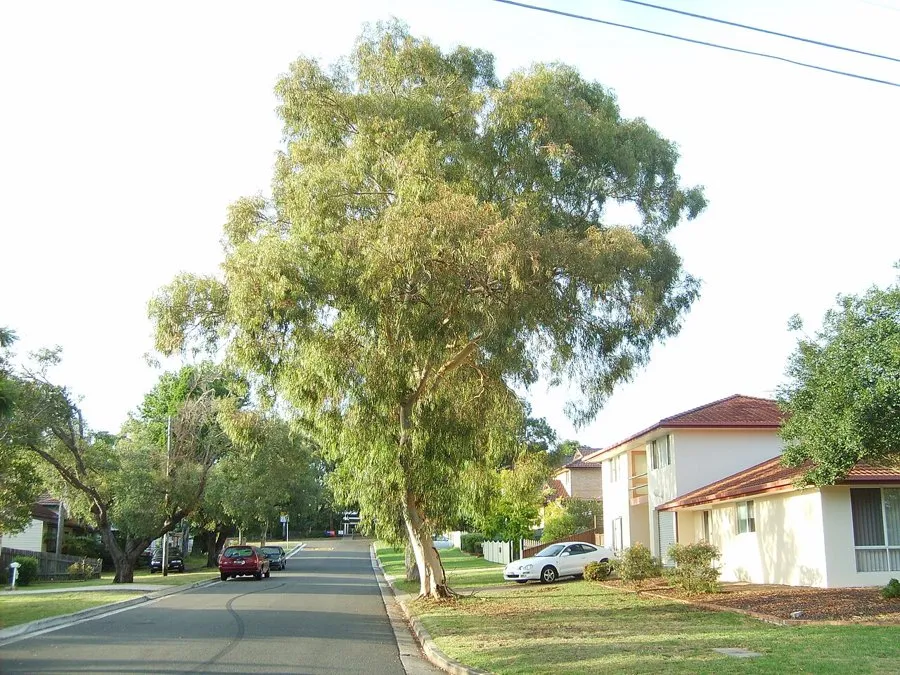
Source: Business Queensland, Winter bronzing bugs.
How winter bronzing bugs damage a tree
Winter bronzing bugs damage a tree by sucking sap from its leaves and injecting enzymes as they feed, which turns the leaves red-brown. Severely bronzed leaves make less energy and fall early, which can lead to partial or complete defoliation, and in some cases to branch dieback or the death of the tree.
Winter bronzing vs other causes of brown gum leaves
Winter bronzing is one of several causes of brown or bronzed gum leaves in South East Queensland, and the timing and the pattern on the leaf tell them apart. Bronzing bugs discolour whole mature leaves in winter, while caterpillars and psyllids leave feeding marks you can see up close.
| Cause | What the leaves look like | When | How to tell |
|---|---|---|---|
| Winter bronzing bug | Whole mature leaves turn red-brown, with black specks of droppings | May to September | Tiny flat brown bugs running on the leaves; middle to upper canopy, north side first |
| Gumleaf skeletoniser | Leaves grazed to a skeleton of veins; the crown looks scorched | Outbreaks in winter; most damage late winter and early spring | Hairy caterpillars wearing a “hat” of old head cases |
| Basket lerps (Cardiaspina) | Red-purple, then brown patches around each feeding site | With new growth | Small lacy lerps on the leaves |
| Creiis psyllid | Reddish-purple, then brown, dying leaf tissue; the crown discolours | With new growth | Round, shell-like lerps, mostly under older leaves |
Sources: Business Queensland, Winter bronzing bugs, Gumleaf skeletoniser and Psyllids and lerps.
How to identify winter bronzing bug
The main sign of the winter bronzing bug is red-brown bronzing of whole mature leaves in the middle to upper canopy between May and September, usually starting on the north to north-eastern side of the tree. Up close, the leaves are often dotted with the bugs’ black droppings, and the bugs themselves run across the leaf when disturbed.
Signs and symptoms of winter bronzing bug
Early signs
- Bronzing on the north side
Mature leaves turning red-brown, starting on the north to north-east. - Black specks
The bugs’ droppings dotted over the leaf surface. - Tiny running bugs
Flat brown bugs darting to the other side of the leaf.
Severe infestation
- Bronzed crown
Much of the canopy red-brown from a distance. - Leaf drop
Bronzed leaves falling early, thinning the crown. - Dieback
Dying branches in severe or repeated infestations.
How to diagnose winter bronzing bug
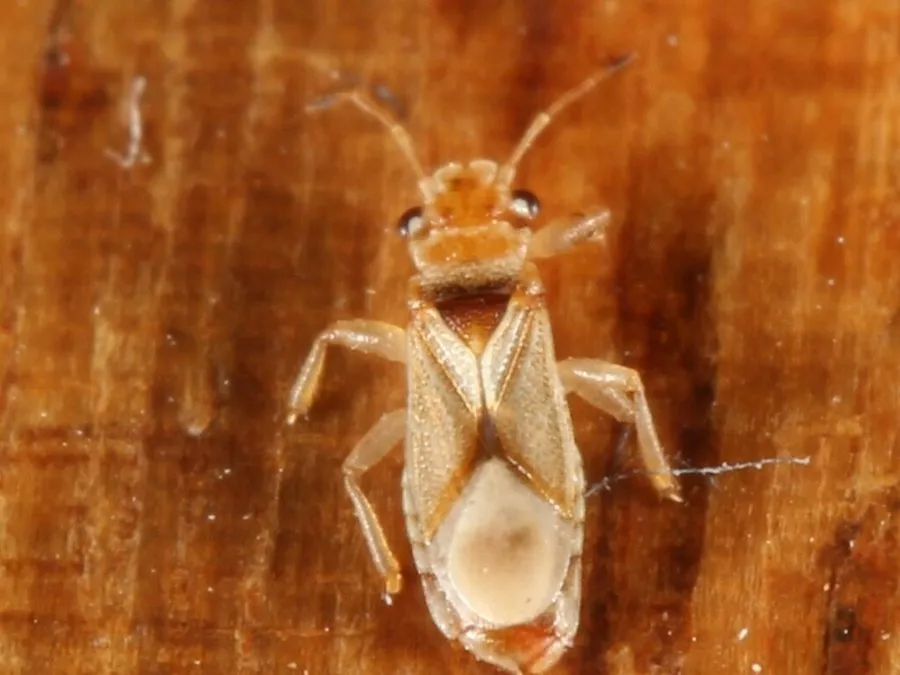
To diagnose winter bronzing bug, look closely at a bronzed leaf with a hand lens: tiny flat brown adults, about 2 to 3 mm long with eyes on broad stalks, and flat orange young with black spots, feeding together, confirm it. Black specks of droppings on the leaf are a strong clue even when the bugs have moved. If there are skeletonised leaves or lerps instead, the cause is caterpillars or psyllids.
What trees does winter bronzing bug affect?
The winter bronzing bug affects eucalypts, and in South East Queensland spotted gums are the most affected, with tallowwood and forest red gum also common hosts. Business Queensland also lists rose gum, blackbutt, Sydney blue gum, red ironbark, Dunn’s white gum, southern blue gum and black wattle as hosts.
- Spotted gums – the most common host, with mature leaves in the middle to upper canopy affected first.
- Tallowwood and forest red gum – commonly affected in South East Queensland.
- Rose gum, blackbutt, Sydney blue gum and red ironbark – also hosts.
- Black wattle – one of the few non-eucalypt hosts.
Suspect winter bronzing on your gum tree? We can tell you if it's bronzing bug and if the tree needs help.
Book a checkWhen winter bronzing bug is most active in South East Queensland
In South East Queensland, winter bronzing bug symptoms appear from May to September, which is how the bug got its name. Its life cycle takes 30 to 60 days, so several generations can build up in a year when conditions suit it.
Source: Business Queensland, Winter bronzing bugs.
How winter bronzing bug spreads
Winter bronzing bugs spread as adults and young move between leaves and nearby trees, and numbers build quickly because each female lays around 60 eggs. The eggs hatch in four to eight days, and the young pass through five stages before becoming adults.
- Eggs on leaves and stems – laid singly or in clusters.
- Fast generations – a 30 to 60 day life cycle allows several generations a year.
How to treat winter bronzing bug
Winter bronzing bug is treated mainly by letting natural enemies work and helping the tree recover, within an integrated pest management (IPM) approach. Most bronzed trees recover without treatment, and chemical control is kept for valuable trees with severe infestations.
Natural enemies
Most effective
What it is
A biological control: the parasitic wasps, lacewings and birds that feed on bronzing bugs.
How it works
Parasitic wasps, lacewings and birds all attack the bugs, and the most effective biological control agent is the minute wasp Cleruchoides noackae, which parasitises its eggs. Broad-spectrum sprays kill these enemies along with the bugs.
Effectiveness
Part of why infestations usually decline and trees recover by themselves.
Helping the tree recover
Effective
What it is
A cultural control: watering through dry spells and mulching the root zone so the tree can replace its leaves.
How it works
A bronzed tree has to regrow the leaves it loses. Keeping it free of drought stress and root damage gives it the reserves to do so, which matters most for young trees and trees bronzed several years running.
Effectiveness
The best support for a bronzed tree, and the main protection against repeated infestations weakening it.
Systemic trunk injection
Last resort
What it is
A chemical control: a registered systemic insecticide injected into the trunk, which the tree carries to its leaves.
How it works
Business Queensland notes that systemic injection into tree stems can give effective control on a small number of trees. Aerial spraying does not work, because the bugs are densest in the middle canopy, where aerial sprays do not reach. Any product must be registered for the use and applied to its label.
Effectiveness
Effective for a few valuable trees with severe or repeated infestations. Not needed for most garden and street trees, which recover on their own.
How to prevent winter bronzing damage
Preventing serious winter bronzing damage relies on keeping gum trees healthy, so they can carry the bugs and replace bronzed leaves. The bugs cannot be kept out of a tree, but a vigorous tree recovers quickly.
- Water young gums through dry winters, when bronzing is at its worst.
- Mulch and protect the root zone from compaction and damage.
- Avoid broad-spectrum sprays, which kill the wasps, lacewings and birds that control the bugs.
- Watch trees that bronze every year, and have them checked if they start dying back.
Will a bronzed gum tree recover?
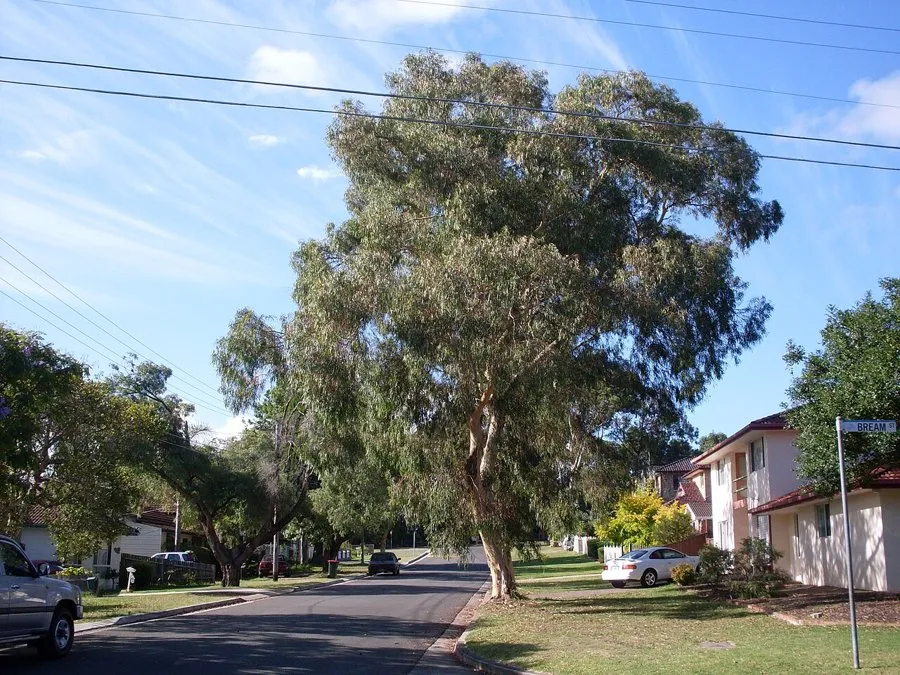
Most gum trees recover from winter bronzing, regrowing their leaves once the bugs decline. The same tree can look badly bronzed one winter and healthy the next.
- Single winters – one season of bronzing is usually followed by full recovery.
- Repeated winters – a tree bronzed heavily year after year can lose vigour, and severe infestations can cause dieback.
- Stressed trees – a tree already struggling with drought or root damage has less in reserve to regrow its leaves.
If a gum keeps bronzing and starts dying back, a tree health assessment can check whether the bugs or an underlying stress is the bigger problem.
Winter bronzing bug: common questions
Why are my gum tree leaves turning brown in winter?
Gum leaves turning red-brown between May and September, starting in the middle to upper canopy, are most often caused by the winter bronzing bug, a tiny sap-sucker. Other causes of browning include gumleaf skeletoniser caterpillars, which also peak in late winter, basket lerps, drought and root damage, so check the leaves for the bugs and their black droppings.
Why is my spotted gum turning red?
Spotted gums are the tree most affected by the winter bronzing bug. Business Queensland notes it most often bronzes the fully expanded, mature leaves of spotted gums in the middle to upper canopy, with the north to north-eastern side usually affected first, from May to September.
Will my gum tree recover from winter bronzing?
Usually, yes. Bronzed leaves work less well and may drop early, but most trees regrow their leaves once the bugs decline. Severe or repeated infestations can cause partial or complete defoliation, branch dieback and, in some cases, tree death, so a tree that bronzes heavily year after year is worth having checked.
What are the tiny brown bugs on my gum leaves?
Tiny, flat, brown to orange-brown bugs only 2 to 3 mm long, running quickly and erratically to the other side of the leaf when disturbed, are likely winter bronzing bugs. Their young are flat and orange with black spots, and both feed together on the same leaves.
How do I treat winter bronzing bug?
On most trees, no treatment is needed: parasitic wasps, lacewings and birds feed on the bugs, and trees usually recover. For a valuable tree with a severe infestation, Business Queensland notes that a registered systemic insecticide injected into the trunk can give effective control on a small number of trees. Aerial sprays do not reach the bugs, which are densest in the middle canopy.
Is winter bronzing killing my tree?
Rarely. Most bronzed trees recover, but severe infestations reduce the leaves' ability to make energy and can cause early leaf drop, partial or complete defoliation, branch dieback and occasionally tree death.
References
- Business Queensland. Winter bronzing bugs. Source
- Business Queensland. Gumleaf skeletoniser (Uraba lugens). Source
- Business Queensland. Psyllids and lerps. Source
- Noack, A. E., & Rose, H. A. (2007). Life-history of Thaumastocoris peregrinus and Thaumastocoris sp. in the laboratory with some observations on behaviour. General and Applied Entomology, 36, 27–33.
General information, not a diagnosis. Many tree problems look alike, and only an inspection, and sometimes a laboratory test, can confirm what is wrong. Any treatment product must be registered for the use and applied strictly to its label.