
Insects South East Queensland
Mealybugs on Trees: Identification and Treatment
Mealybugs are small, soft, sap-sucking insects covered in white, mealy wax, and in South East Queensland they are common on citrus, fruit trees and ornamentals, where they hide in sheltered spots and cover plants in honeydew and sooty mould. This guide shows you what mealybugs do, how to identify mealybugs and how to treat mealybugs on trees.
- What it is
- Small, soft, sap-sucking insects covered in white wax
- Scientific name
- Pseudococcidae, including Planococcus citri and Pseudococcus longispinus
- Trees affected
- Citrus, custard apple relatives, casimiroa, rambutan and many ornamentals
- Peak season
- Year-round in warm weather; at least six generations a year in Queensland
- How it spreads
- Crawlers that walk and blow on the wind, carried by ants and on infested plants
- Key sign
- White, cottony insects in stem forks, leaf joints and between fruit, often with honeydew and sooty mould
- Found mealybugs on your tree?
- We'll check it and tell you if it needs treating. Book a check →
What are mealybugs?
Mealybugs are small, soft, oval insects that suck sap from plants and cover themselves in a white, mealy wax. They are related to scale insects but, unlike most scale, can move about throughout their lives, and in South East Queensland they are common on citrus, fruit trees and ornamentals.
- OrderHemipteraThe true bugs, with sucking mouthparts
- SuperfamilyCoccoideaThe scale insects and mealybugs
- FamilyPseudococcidaeThe mealybugs
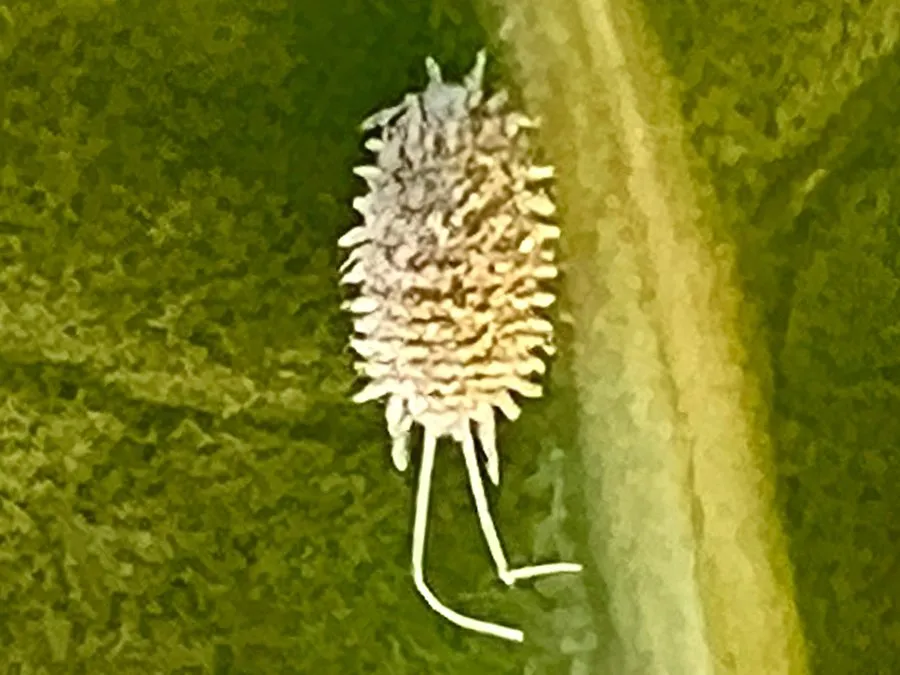
How mealybugs damage a tree
Mealybugs damage a tree by sucking its sap, which weakens it, and heavy feeding slows growth and causes leaf drop. They also excrete sticky honeydew, which grows black sooty mould, and on citrus they settle under the fruit’s cap and between touching fruit, where heavy sooty mould leads to end rot and fruit drop.
Types of mealybugs on trees
The mealybugs found on South East Queensland trees are mainly the citrus mealybug and the longtailed mealybug, and they are easiest to tell apart by their waxy filaments and whether they lay egg sacs. Several look-alikes are worth knowing, because one of them eats mealybugs.
| Insect | What it looks like | Where it is found | What to know |
|---|---|---|---|
| Citrus mealybug (Planococcus citri) | White, about 3 mm, with 18 pairs of short waxy filaments; yellow fluid if crushed; cottony egg sacs | Citrus, custard apple relatives, casimiroa, rambutan, ornamentals | A major pest of citrus fruit; at least six generations a year in Queensland |
| Longtailed mealybug (Pseudococcus longispinus) | White, with two long tail filaments | Ornamentals and many garden plants | Gives birth to live young, so has no egg sacs |
| Mealybug ladybird larva (Cryptolaemus montrouzieri) | White, mealy, with long waxy strands, up to 10 mm | Wherever mealybugs are | A predator of mealybugs; leave it alone |
| Cottony cushion scale (Icerya purchasi) | A scale insect with a large, white, fluted egg sac | Many garden plants | A scale insect, not a mealybug |
Sources: Business Queensland, Citrus mealybug; Flint (2016), UC IPM Mealybugs.
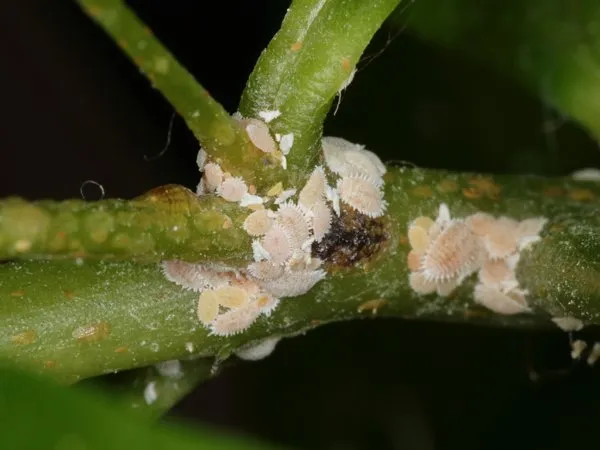
Citrus mealybug
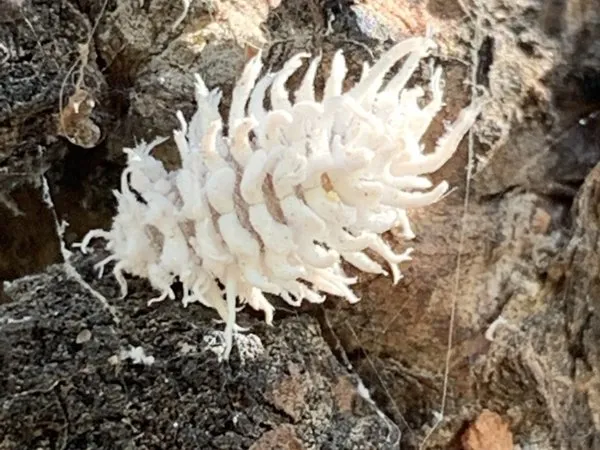
Mealybug ladybird larva (look-alike)
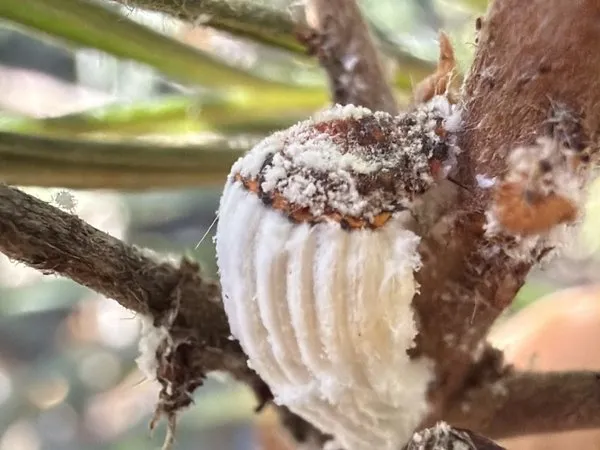
Cottony cushion scale (look-alike)
How to identify mealybugs
The main sign of mealybugs is small, white, cottony insects clustered in sheltered spots: stem forks, leaf joints, under the cap of fruit and between fruits or leaves that touch. Sticky honeydew, sooty mould and ants are often what draw attention to them first.
Signs and symptoms of mealybugs
Early signs
- White, cottony clusters
Small waxy insects in forks, joints and crevices. - Cottony egg sacs
Fluffy white masses beside the females. - Ants
Ants climbing the plant to feed on honeydew.
Heavy infestation
- Sooty mould
Black coating on leaves, stems and fruit. - Leaf drop and slow growth
A weakened, thinning plant. - Damaged fruit
Citrus fruit with end rot, falling early.
How to diagnose mealybugs
To diagnose mealybugs, look under the wax: a mealybug is a soft, oval insect that can walk, and the citrus mealybug leaks yellow fluid when crushed. Check for look-alikes before acting. Mealybug ladybird larvae are larger, up to 10 mm, with long waxy strands, and eat mealybugs. Cottony cushion scale sits still with a large, fluted egg sac. Woolly aphids and whiteflies are also white and waxy.
What trees do mealybugs attack?
Mealybugs attack many trees and shrubs, and in South East Queensland they are most often found on citrus, fruit trees such as custard apple relatives, casimiroa and rambutan, and ornamentals. Business Queensland lists citrus mealybug as a major and frequent pest of these fruit trees.
- Citrus – citrus mealybug, especially on the fruit.
- Custard apple relatives – soursop and rollinia.
- Casimiroa and rambutan – citrus mealybug.
- Ornamentals – citrus and longtailed mealybugs, especially in sheltered spots and on indoor and potted plants.
Suspect mealybugs on your tree? We can check it and tell you if it needs treating.
Book a checkWhen mealybugs are most active in South East Queensland
In South East Queensland, mealybugs are active year-round in warm weather, and citrus mealybug has at least six generations a year in Queensland. The whole life cycle takes about six weeks in summer, which is why numbers can build quickly.
On citrus, the crawlers settle under the fruit’s cap in early November, then move to hollows on the fruit or between touching fruits, so late spring and summer is the time to check citrus fruit.
Source: Business Queensland, Citrus mealybug.
How mealybugs spread
Mealybugs spread as crawlers, the tiny young that walk to new feeding spots and blow on the wind, and on infested plants moved between gardens. Ants also protect them as they tend them for honeydew.
- Crawlers – each citrus mealybug lays 300 to 600 eggs, which hatch in about a week.
- Infested plants – mealybugs arrive on new plants, pots and stakes.
- Ants – ants protect mealybugs and keep their predators away.
Sources: Business Queensland, Citrus mealybug and Cryptic mealybug; Flint (2016).
How to treat mealybugs
Mealybugs are treated by letting natural enemies work, controlling ants, and removing mealybugs with water, pruning and soft sprays, within an integrated pest management (IPM) approach. Broad-spectrum insecticides usually make them worse, because they kill the predators that keep mealybugs down.
Natural enemies
Most effective
What it is
A biological control: the mealybug ladybird, lacewings and parasitic wasps.
How it works
The mealybug ladybird is the most important predator; once established, Business Queensland notes it can control heavy infestations in two to three months, although it is sometimes slow to find them. Lacewing larvae and the parasitic wasp Leptomastix dactylopii also attack mealybugs. A mummified mealybug or one with a small hole has been parasitised.
Effectiveness
The main reason mealybugs are usually kept in check. It only works where ants are controlled and broad-spectrum sprays are avoided.
Ant control
Effective
What it is
A physical or chemical control: stopping ants from climbing the plant.
How it works
Ants feed on mealybug honeydew and protect mealybugs from their natural enemies. Business Queensland notes that heavy ant infestations seriously affect natural enemies, and advises treating ants at the base of the tree.
Effectiveness
Often the step that lets the ladybirds and wasps finally get on top of a persistent infestation.
Hosing and pruning
Small plants
What it is
A physical control: washing mealybugs off with a strong stream of water, and cutting out heavily infested shoots.
How it works
A strong jet of water knocks exposed mealybugs off, and repeating it every few days keeps numbers down. Pruning removes colonies hidden in dense growth and forks.
Effectiveness
Useful on small trees, hedges and potted plants, but it misses mealybugs tucked into crevices.
Horticultural oils and soaps
Small plants
What it is
A chemical control using low-toxicity products: horticultural oils, insecticidal soaps and neem oil.
How it works
These products work best on young mealybugs, as the wax protects the adults, and they need to touch the insects to work. Test on a small area first, as some plants are damaged by them. Any product must be registered for the use and applied to its label.
Effectiveness
Helpful on small plants when repeated, and gentler on natural enemies than broad-spectrum sprays.
Checking new plants and feeding lightly
Supporting
What it is
A cultural control: inspecting new plants, and avoiding heavy nitrogen fertiliser.
How it works
Mealybugs often arrive on new plants, pots and stakes, so checking them before planting keeps them out. Excess nitrogen pushes out the soft growth where mealybugs breed.
Effectiveness
A simple way to avoid bringing mealybugs into the garden and to make plants less attractive to them.
Systemic insecticides
Last resort
What it is
A chemical control: an insecticide taken up by the plant, which reaches mealybugs feeding on its sap.
How it works
University of California IPM notes that systemic products are less reliable against mealybugs than against other sap-suckers, and that they can harm natural enemies and pollinators. Any product must be registered for the use and applied to its label.
Effectiveness
Unreliable, and it can undo the natural control that keeps mealybugs down. Rarely the right choice for a garden tree.
How to prevent mealybugs
Preventing mealybugs relies on keeping their natural enemies working and not bringing them into the garden. Mealybugs are usually kept in check where ants are controlled and broad-spectrum sprays are not used.
- Check new plants, pots and stakes for white, cottony insects before planting.
- Keep ants off trees and shrubs.
- Avoid broad-spectrum insecticides, which kill mealybug ladybirds and parasitic wasps.
- Feed lightly, avoiding heavy nitrogen that pushes soft growth.
- Check citrus fruit from late spring, when crawlers settle under the fruit’s cap.
Mealybugs: common questions
What is the white fluffy stuff on my tree?
White, fluffy or cottony patches in the forks of stems, leaf joints or between fruit are usually mealybugs, small insects covered in white wax, often with their cottony egg sacs. Other white, fluffy things include cottony cushion scale, woolly aphids, and the larvae of the mealybug ladybird, which eat mealybugs.
What are the white cottony bugs on my citrus?
White, waxy bugs clustered on citrus stems, under the fruit's cap or where fruits touch are most likely citrus mealybugs. Business Queensland notes that citrus mealybug settles under the fruit calyx from early November, and that heavy infestations bring sooty mould, end rot and fruit drop.
Are the white fluffy bugs on my tree ladybirds?
They might be. The larvae of the mealybug ladybird (Cryptolaemus montrouzieri) are covered in white, waxy strands and look very like large mealybugs, growing to about 10 mm. They eat mealybugs, so leave them alone; adult mealybug ladybirds are about 4 mm, with black wing covers and a reddish-brown head.
Is it mealybugs or cottony cushion scale?
Mealybugs are small, mobile, oval insects covered all over in mealy wax, often with short waxy filaments around the edge. Cottony cushion scale is a scale insect that sits still on the stem with a large, white, fluted egg sac behind it. Both make honeydew and sooty mould.
How do I get rid of mealybugs?
Hose mealybugs off with a strong stream of water, prune out heavily infested shoots, and control the ants that protect them. Horticultural oils and insecticidal soaps work best on young mealybugs, as the wax protects the adults. Avoid broad-spectrum sprays, which kill the ladybirds and wasps that control mealybugs.
Why do mealybugs keep coming back?
Usually because their natural enemies cannot reach them. Ants protect mealybugs for their honeydew, and Business Queensland notes that serious infestations are often the result of insecticides killing natural enemies. Mealybugs also hide in forks and crevices that sprays miss, and breed through at least six generations a year in Queensland.
Do mealybugs kill trees?
Rarely. Mealybugs weaken plants by sucking their sap, and heavy feeding can slow growth and cause leaf drop, but established trees seldom die from them. The bigger problems are usually the sooty mould that grows on their honeydew and, on citrus, damaged and fallen fruit.
References
General information, not a diagnosis. Many tree problems look alike, and only an inspection, and sometimes a laboratory test, can confirm what is wrong. Any treatment product must be registered for the use and applied strictly to its label.