
Insects South East Queensland
Scale Insects on Trees: Identification and Treatment
Scale insects are small sap-sucking insects that cling to the stems and leaves of trees, and in South East Queensland they are a common pest of lilly pilly, eucalypts and fruit trees, often given away by black sooty mould on the leaves. This guide shows you what scale insects do, how to identify scale on trees and how to treat scale insects.
- What it is
- Small sap-sucking insects that live fixed to stems and leaves
- Scientific name
- Coccoidea (many species)
- Trees affected
- Lilly pilly, umbrella tree, pittosporum, callistemon, eucalypts, citrus, mango, avocado and many other trees
- Peak season
- Crawlers hatch in spring and again from late summer to autumn
- How it spreads
- Crawlers that walk, blow on the wind or are carried by ants and birds
- Key sign
- Small waxy or shell-like bumps on stems and leaf midribs, often with ants and sooty mould
- Found scale on your tree?
- We'll check it and tell you if it needs treating. Book a check →
What are scale insects?
Scale insects are small, sap-sucking insects that spend most of their lives fixed in one place on a tree’s stems or leaves, protected by a covering of wax or a hard shell. They belong to the Coccoidea, a group of true bugs related to aphids and mealybugs, and include pests such as pink wax scale and gumtree scale that are common on South East Queensland trees.
- KingdomAnimaliaAnimals
- OrderHemipteraThe true bugs, with sucking mouthparts
- SuperfamilyCoccoideaThe scale insects and mealybugs
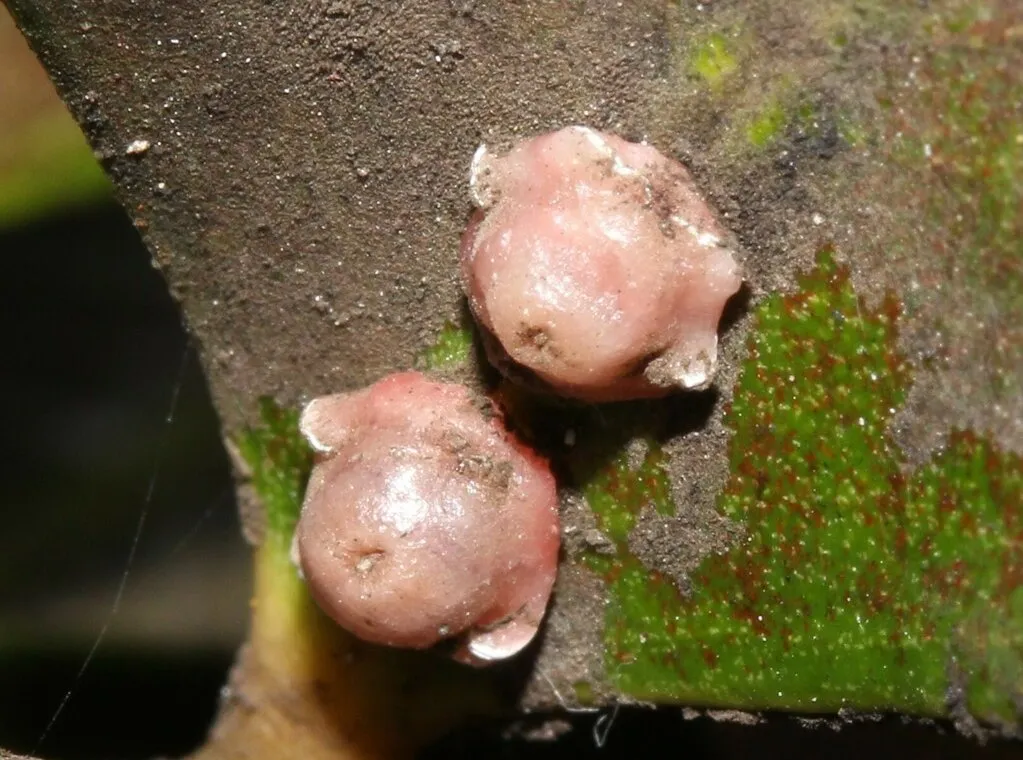
How scale insects damage a tree
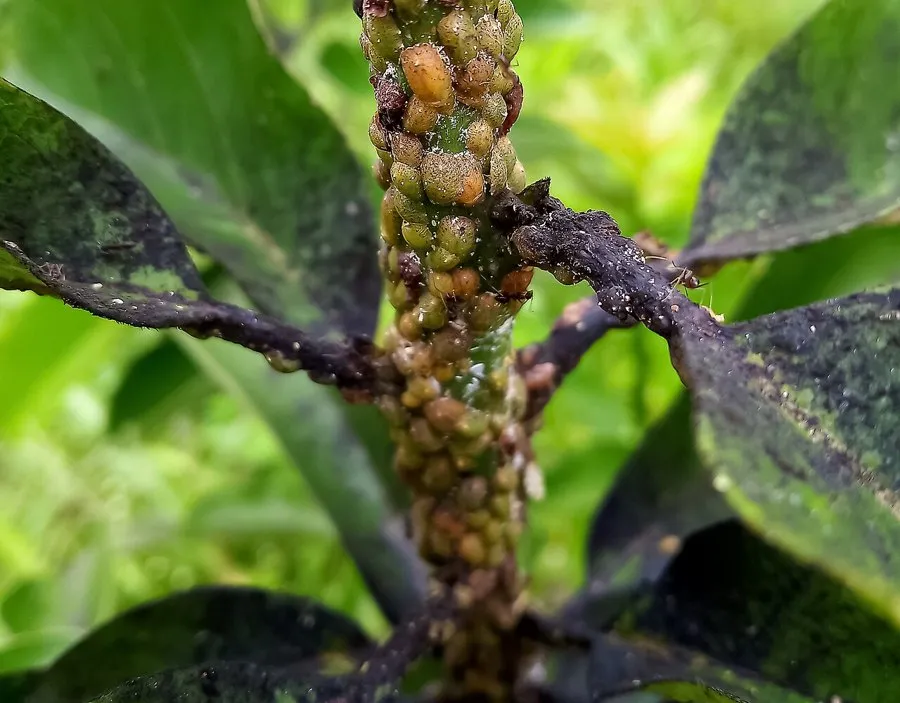
Scale insects damage a tree by sucking its sap. They take the protein they need and excrete the excess sugar as sticky honeydew, which drips onto the leaves below and grows black sooty mould, often the first sign people notice. Light infestations do little harm, but heavy ones weaken the tree and cause leaf drop and dieback, especially on young or stressed trees.
Types of scale insects
There are three main types of scale insects on trees: soft scales, armoured scales and felt scales, and they differ in their covering and in how much honeydew they make. Soft scales and felt scales produce the most honeydew, so they are the ones behind most sooty mould.
| Type | What it looks like | Honeydew and sooty mould | Examples in SEQ |
|---|---|---|---|
| Soft scales (Coccidae) | Raised domes of wax or a soft shell that is part of the insect’s body, 2 to 5 mm across | Heavy | Pink wax scale, black scale, soft brown scale |
| Armoured scales (Diaspididae) | Flat, hard, separate covers the insect lives under, about 2 mm across | Little or none | Red scale |
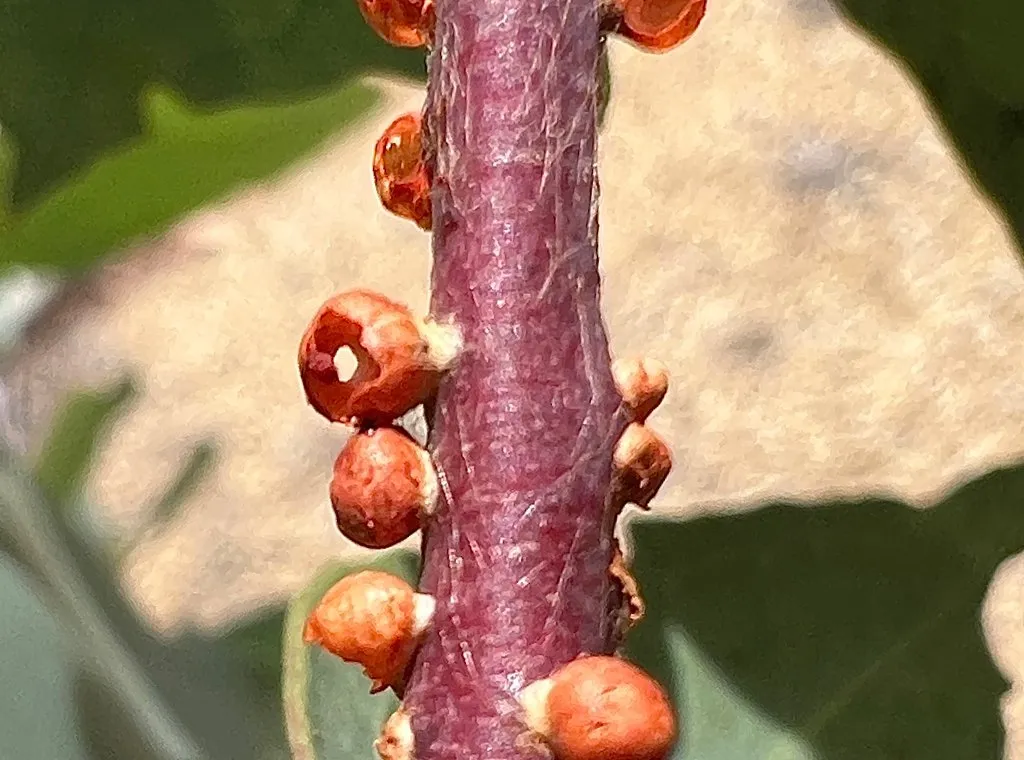
| Felt scales (Eriococcidae) | Clusters of small waxy, leathery or cottony capsules, 2 to 4 mm across | Heavy | Gumtree scale |
| Mealybugs (Pseudococcidae) | Soft-bodied insects about 3 mm long, coated in white, mealy wax | Heavy | Citrus mealybug |
Sources: Business Queensland fact sheets for each species.
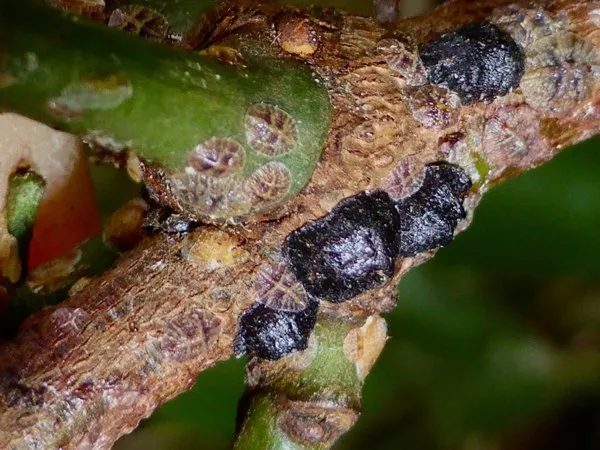
Soft scale
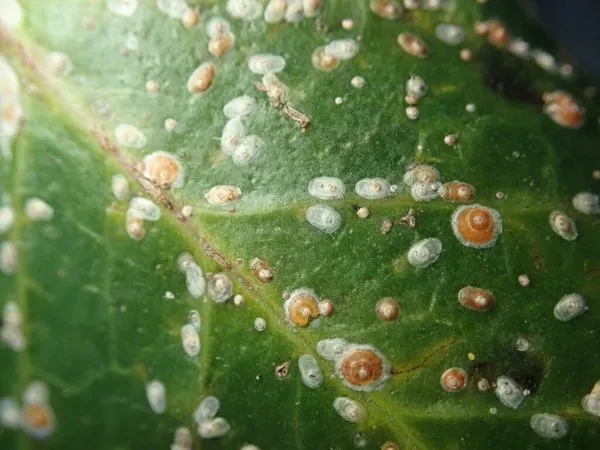
Armoured scale
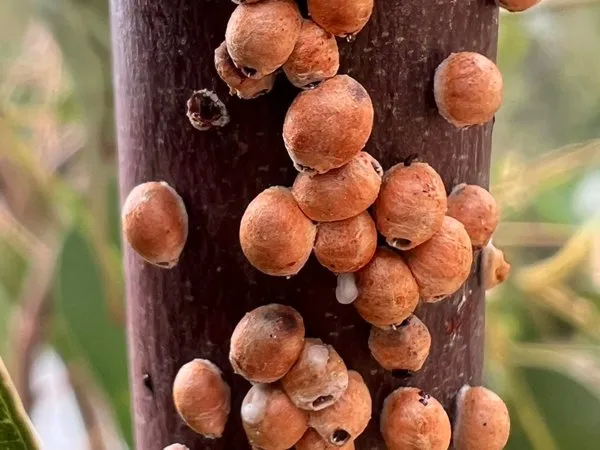
Felt scale
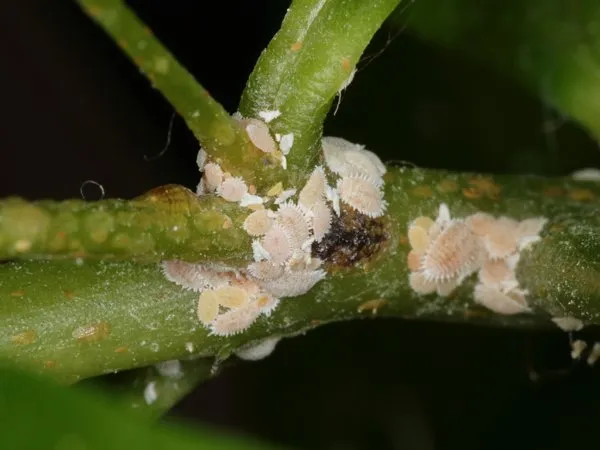
Mealybugs
How to identify scale insects
The main sign of scale insects is small waxy or shell-like bumps on the stems and along the leaf midribs that do not move, often with ants and black sooty mould nearby. Because the honeydew drips down, the mould usually sits below the scales, so look up from the blackest leaves to find the insects.
Signs and symptoms of scale insects
Early signs
- Sticky leaves
A clear, sticky honeydew on leaves, and on cars and paving under the tree. - Ants on the trunk
Steady lines of ants climbing the tree to feed on the honeydew. - Small bumps
Waxy domes or flat shells along the leaf midribs and young stems.
Advanced damage
- Black leaves
Sooty mould covering the leaves, stems and fruit. - Crowded stems
Stems encrusted with scales, often of every size. - Leaf drop and dieback
Yellowing, falling leaves and dying shoots on heavily infested trees.
How to diagnose scale insects
To diagnose scale insects, look along the midribs, leaf undersides and young stems above the mould for waxy domes or shells that do not move, often with ants among them. Gumtree scale releases a reddish-brown fluid when squashed, and a scale with a small round hole has been killed by a parasitic wasp.
What trees do scale insects affect?
Scale insects affect a wide range of trees, and in South East Queensland they are most often found on lilly pilly, umbrella tree, pittosporum, callistemon, eucalypts and fruit trees such as citrus, mango and avocado. Each species of scale has its own range of hosts, and stressed trees are more likely to be heavily infested.
| Tree | Common scale | What to know |
|---|---|---|
| Lilly pilly (Syzygium) | Pink wax scale | Sooty mould on the leaves is often the first sign |
| Umbrella tree (Heptapleurum actinophyllum) | Pink wax scale | A common host, often heavily infested |
| Pittosporum and callistemon | Pink wax scale | Native shrubs and small trees commonly attacked |
| Spotted gum, rose gum, blackbutt, forest red gum, swamp mahogany | Gumtree scale | Colonies on stems and leaves; most damaging on young or stressed trees |
| Citrus | Pink wax scale, black scale, red scale | Several scales at once; sooty mould spoils the fruit |
| Mango and avocado | Pink wax scale | Sooty mould on leaves and fruit |
| Olive and gardenia | Black scale | Sooty mould is usually a bigger problem than the feeding |
Sources: Business Queensland, Pink wax scale, Black scale, Red scale and Gumtree scale.
Suspect scale insects on your tree? We can find what's causing it and tell you if it needs treating.
Book a checkWhen scale insects are most active in South East Queensland
In South East Queensland, scale insects are most active when their crawlers hatch, in spring and again from late summer to autumn. Pink wax scale has two generations a year in Queensland: the first crawlers emerge from mid-September to early December, mostly from mid-October to mid-November, and the second from February to late April.
Other scales follow their own timing. Gumtree scale produces two to five generations a year depending on the temperature, and black scale crawlers hatch mostly in summer. Sooty mould builds up fastest in warm, humid weather, when honeydew stays sticky on the leaves.
Source: Business Queensland, Pink wax scale, Gumtree scale and Black scale.
How scale insects spread
Scale insects spread as crawlers, the tiny, mobile young that hatch under the mother scale and walk off to find a place to feed. Once a crawler settles, it starts feeding and building its covering, and most adult females never move again.
- Walking – crawlers move along the branches to new shoots and leaves.
- Wind – crawlers are blown into neighbouring trees.
- Ants and birds – crawlers ride on birds and ants, and ants also carry scales to new feeding spots.
- Infested plants – scale arrives on new plants brought into the garden.
How to treat scale insects
Scale insects are treated by controlling the ants that protect them, letting natural enemies work, and spraying horticultural oil at the crawler stage, within an integrated pest management (IPM) approach. Once the scale is under control, any sooty mould stops growing and weathers away.
Ant control
Most effective
What it is
A physical or chemical control: stopping ants from reaching the scale, with a sticky band around the trunk or a registered treatment at its base.
How it works
Ants feed on the honeydew, and in return they protect the scale from ladybirds and parasitic wasps and carry scales to new feeding spots. Business Queensland advises treating ants at the base of the tree where they are active. Once the ants are kept off, the scale's natural enemies can reach it.
Effectiveness
Often the single most useful step, because it lets the natural control the tree already has work again. It is the first thing to check on any tree with scale and a line of ants.
Natural enemies
Effective
What it is
A biological control: the predators and parasites that feed on scale insects.
How it works
Ladybirds, lacewing larvae, hoverflies, assassin bugs, small birds and tiny parasitic wasps all attack scale. For pink wax scale, the wasp Anicetus beneficus, introduced in 1977, is very effective where no disruptive sprays are used. Broad-spectrum insecticides kill these enemies along with the pest, which is why serious infestations often follow spraying.
Effectiveness
Usually enough to keep scale at a level the tree can live with, provided ants are controlled and broad-spectrum sprays are avoided. A scale with a small round hole in it has already been killed by a wasp.
Horticultural oil at the crawler stage
Small trees only
What it is
A chemical control using a low-toxicity product: white oil or another horticultural oil, sprayed when the crawlers are out.
How it works
Crawlers do not yet have the wax or shell that protects the adults, so oil kills them where it covers them. Business Queensland advises spraying only once all the eggs have hatched, which is when young scales line the midribs and no liquid oozes from a squashed old scale. A spray droplet must touch each scale, and a follow-up application is often needed. Any product must be registered for the use and applied to its label, and oils can scorch leaves in hot weather.
Effectiveness
Effective on hedges and small trees where the whole canopy can be covered at the right time. On a large tree, full coverage is rarely possible.
Pruning out infested shoots
Supporting
What it is
A physical control: cutting off the worst-infested shoots, or squashing small colonies by hand.
How it works
Scale colonies are often concentrated on a few shoots. Removing them takes out most of the population and the crawlers it would produce. For gumtree scale, Business Queensland suggests squashing small infestations or removing the infested branches.
Effectiveness
Useful on small trees and hedges with a few heavily infested shoots, and a good first step before any spray.
Reducing tree stress
Supporting
What it is
A cultural control: dealing with drought, compaction, root damage or poor planting that weakens the tree.
How it works
Stressed trees are more susceptible to heavy scale infestation. Watering during drought, mulching the root zone and fixing the cause of stress help the tree cope with feeding and grow out of the damage.
Effectiveness
Does not remove scale by itself, but makes every other treatment more likely to last.
Systemic insecticide injection
Last resort
What it is
A chemical control: a systemic insecticide injected into the trunk, which the tree carries up to the leaves in its sap.
How it works
Because scale insects feed on sap, a systemic product reaches them under their covering, where sprays cannot. Business Queensland lists stem injection as an option for heavy gumtree scale infestations. Any product must be registered for the use and applied to its label.
Effectiveness
Can control heavy infestations on large trees that cannot be sprayed, but it also affects other insects feeding on the tree. Kept for serious infestations, after ants and stress have been dealt with.
How to prevent scale insects
Preventing scale insects relies on keeping their natural enemies working and the tree healthy, so that scale never builds up to damaging numbers. Most problems start where ants or sprays have removed the natural control.
- Keep ants off the tree, because they protect scale from its predators.
- Avoid broad-spectrum insecticides, which kill ladybirds and parasitic wasps along with the pest.
- Check new plants for scale before planting them.
- Look at the stems and midribs in spring, when the first crawlers hatch, and deal with small colonies early.
- Keep trees well watered and mulched through dry spells.
Gumtree scale on eucalypts
Gumtree scale is a felt scale that attacks eucalypts, and heavy infestations can weaken or kill young and stressed trees. It forms large colonies of small pink, red, purple, green or brown capsules on the stems, branches and leaves. In South East Queensland it attacks spotted gum, rose gum, blackbutt, forest red gum and swamp mahogany.
- Defoliation – heavy infestations strip the lower and inner canopy of young trees.
- Poor form – scale can stunt and distort small or stressed trees.
- Tree death – heavy infestations can kill trees, according to Business Queensland.
On an established eucalypt, natural enemies usually keep gumtree scale in check. If a young or stressed gum is heavily infested, a tree health assessment can find whether the scale or an underlying stress is the bigger problem.
Scale insects: common questions
Why are there ants all over my tree?
Ants climbing a tree in a steady line are usually feeding on honeydew from scale insects, mealybugs or other sap-suckers. The ants protect the insects from their predators and parasites in return, and can move them to new feeding spots, so a tree full of ants is worth checking for scale.
Can scale insects kill a tree?
Rarely, but heavy infestations can. Business Queensland notes that heavy gumtree scale infestations can kill trees, and severe scale causes leaf drop and dieback, especially on young or stressed trees. On an established, healthy tree, scale is usually a nuisance rather than a threat.
Does white oil kill scale insects?
White oil and other horticultural oils kill scale most reliably at the crawler stage, before the young scales build their protective wax or shell. Each scale must be covered by the spray to be killed, and a follow-up application is often needed. Any product must be registered for the use and applied to its label.
Where do scale insects come from?
Scale insects hatch as tiny, mobile crawlers that walk, blow on the wind or ride on ants and birds to a new plant, and they also arrive on infested plants brought into the garden. Once a crawler settles and starts feeding, it builds its covering and stays put, so a colony grows in place.
Do scale insects cause sooty mould?
Yes. Soft scales and felt scales excrete large amounts of sugary honeydew, and the black sooty mould grows on it. Armoured scales, such as red scale, make little honeydew, so they rarely cause it.
What eats scale insects?
Ladybirds such as the mealybug ladybird (Cryptolaemus montrouzieri), lacewing larvae, small parasitic wasps, hoverflies, assassin bugs and small birds all feed on scale insects. They usually keep scale under control unless ants drive them off or broad-spectrum sprays kill them.
References
- Business Queensland. Pink wax scale (Ceroplastes rubens). Source
- Business Queensland. Black scale (Saissetia oleae). Source
- Business Queensland. Soft brown scale. Source
- Business Queensland. Red scale (Aonidiella aurantii). Source
- Business Queensland. Gumtree scale (Eriococcus species). Source
- Business Queensland. Citrus mealybug (Planococcus citri). Source
General information, not a diagnosis. Many tree problems look alike, and only an inspection, and sometimes a laboratory test, can confirm what is wrong. Any treatment product must be registered for the use and applied strictly to its label.