
Other South East Queensland
Slime Flux and Wetwood: Identification and Treatment
Slime flux is a smelly, slimy liquid that oozes from cracks and wounds in tree trunks, caused by bacteria growing in the wood, a condition known as bacterial wetwood. It looks alarming, but on most trees it is cosmetic. This guide shows you what slime flux and wetwood are, how to identify slime flux on a tree and how to treat bacterial wetwood.
- What it is
- A bacterial infection of the wood that makes slimy liquid ooze from cracks and wounds
- Scientific name
- Bacterial wetwood: several bacteria, including Clostridium, Enterobacter and Klebsiella
- Trees affected
- Many mature trees; best known on elms, maples, oaks, poplars and willows
- Peak season
- Year-round; flows most in warm weather
- How it spreads
- Bacteria common in soil and water, entering through wounds or roots
- Key sign
- Dark, slimy, often foul-smelling ooze streaking down the trunk from a crack or wound
- Something oozing from your tree?
- We'll find what's causing it and if it matters. Book a check →
What is slime flux?
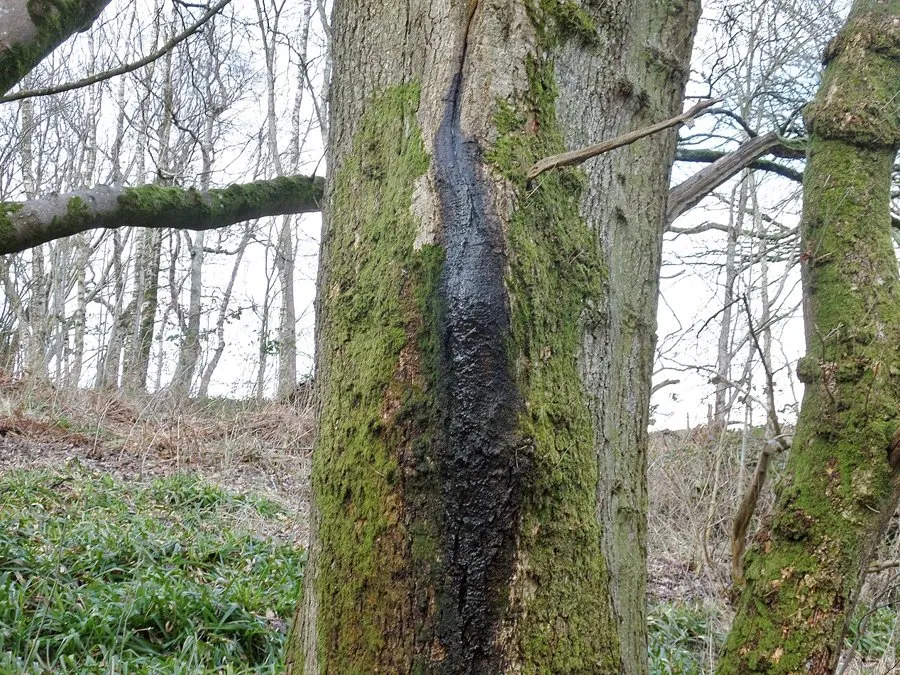
Slime flux is a slimy, often foul-smelling liquid that oozes from cracks and wounds in a tree trunk and streaks down the bark. It is caused by bacterial wetwood, an infection by bacteria common in soil and water that live in the inner wood, ferment the sap and build up gas pressure that pushes the liquid out.
- KingdomBacteriaCommon soil and water bacteria
- GeneraClostridium, Enterobacter, Klebsiella and othersSeveral kinds, none specific to one tree
- ConditionBacterial wetwoodWet, darkened inner wood that produces slime flux
How wetwood affects a tree
Wetwood affects a tree by filling its inner wood with bacteria that feed on the sap, use up the oxygen, produce methane and raise the internal pressure, to around 60 psi compared with 5 to 10 psi in an unaffected tree. The slime kills the bark tissue and the grass it drips onto, but the low-oxygen wood actually holds back wood-rotting fungi, and wood strength is not greatly altered.
Sources: Moorman (2025), Penn State Extension; Colorado State University Extension, Bacterial wetwood.
Slime flux vs other ooze from a tree
Slime flux is one of several things that ooze from a tree trunk, and the colour, texture and smell tell them apart. In South East Queensland, red kino bleeding from gum trees is often mistaken for slime flux.
| Ooze | What it looks like | What it means |
|---|---|---|
| Slime flux (bacterial wetwood) | Slimy, watery to dark ooze streaking down from a crack or wound, often foul-smelling; dries ashen grey | Bacteria in the wood; usually cosmetic |
| Alcoholic flux | Ooze from shallow wounds | Short-lived; different from slime flux |
| Kino on eucalypts | Red, sticky, resinous gum | The tree sealing a wound; check for borers or cankers |
| Dark weeping patch at the base | Dark, wet, sunken bark low on the trunk | Possible collar rot or canker; see phytophthora root rot |
Sources: Moorman (2025); Colorado State University Extension; University of Kentucky, Kentucky Pest News; Business Queensland, Longicorn borers.
How to identify slime flux
The main sign of slime flux is a dark, wet streak running down the trunk from a crack, wound or branch junction, often with a sour or rank smell. Fresh ooze is slimy and attracts insects; dried ooze turns ashen grey.
Signs and symptoms of slime flux
Early signs
- Wet streaks
Light or dark vertical streaks running down from a crack or wound. - Bad smell
A rank, sour odour from the fresh ooze. - Insects
Flies, wasps and other insects feeding on the slime.
Ongoing flux
- Grey crust
Dried ooze leaving an ashen-grey stain on the bark. - Dead grass below
Grass and small plants killed where the slime drips. - Coloured slime
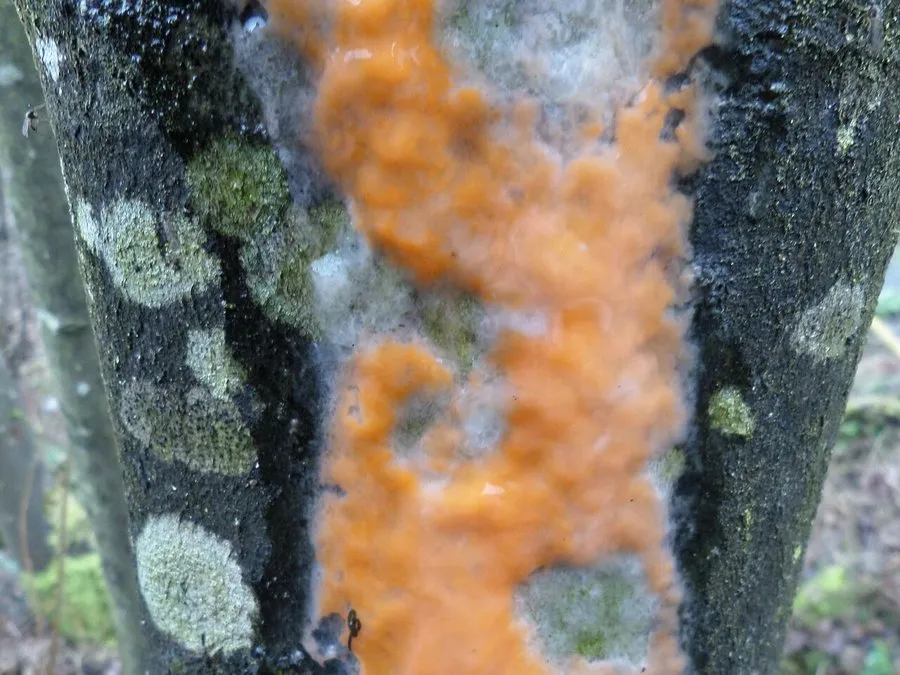
Orange or yellow growths of yeasts and moulds on the ooze.
How to diagnose slime flux
To diagnose slime flux, look at the liquid itself: slime flux is slimy and watery, streaks down from a crack or wound, and usually smells. Red, sticky gum on a eucalypt is kino, the tree’s response to damage, and points to borers or a canker instead. A dark, sunken, weeping patch low on the trunk is more likely collar rot or a canker, and is worth having checked.
What trees get slime flux?
Slime flux can affect many mature trees, and overseas research describes it most on elms, maples, oaks, poplars, willows and cottonwoods, with young trees sometimes infected too. The bacteria involved are not specific to any one kind of tree.
- Elms, maples and oaks – the best-documented hosts.
- Poplars and willows – also commonly affected.
- Other mature trees – any tree with wounds or cracks can develop it.
Suspect slime flux on your tree? We can find what's causing it and whether it matters.
Book a checkWhen slime flux is most active
Slime flux can appear at any time of year, as the bacteria live in the wood year-round. The pressure that pushes the slime out builds as the bacteria ferment the sap, so flows can come and go.
How slime flux spreads
Slime flux does not spread from tree to tree like a fungus. The bacteria that cause wetwood are common in soil and water, and they enter young trees, or older trees through root and trunk wounds.
- Wounds – mower and trimmer damage, pruning cuts and cracks let the bacteria in.
- Roots – the bacteria probably enter through root wounds.
- Not contagious – a tree with slime flux does not infect its neighbours.
How to treat slime flux
Slime flux has no cure, so it is treated by keeping the tree healthy and avoiding new wounds, within an integrated approach. On most trees it is cosmetic and can simply be left alone.
Reducing tree stress
Most effective
What it is
A cultural control: watering in drought, mulching, and protecting the root zone from compaction.
How it works
Colorado State University Extension calls preventing tree stress the best management approach, and notes drought can make wetwood worse. Penn State warns that under heavy stress, such as soil compaction, the bacteria can spread and cause wilting and dieback.
Effectiveness
Keeps wetwood a cosmetic problem rather than a health one.
Avoiding new wounds
Effective
What it is
A cultural control: protecting the trunk and roots from damage.
How it works
Wounds let the bacteria in and give the slime new places to escape. Keeping mowers and trimmers off the trunk, and pruning correctly, avoids creating them.
Effectiveness
The main way to prevent wetwood in trees that do not have it yet.
Washing and protecting plants below
Cosmetic
What it is
Washing the slime off the bark, and keeping it off plants beneath the tree.
How it works
The slime kills grass and small plants it drips onto. Washing the bark improves the look of the tree, and keeping beds clear of the drip line protects plants below.
Effectiveness
Purely cosmetic; the flux returns while the bacteria are active.
Drilling drain holes
Not recommended
What it is
Drilling into the trunk and fitting a pipe to release the pressure and drain the liquid.
How it works
This was once common practice, but Penn State Extension notes it is no longer recommended: affected trees generally survive without it, and the holes are new wounds and new places for slime to ooze out.
Effectiveness
Does more harm than good. Leave the tree undrilled.
How to prevent slime flux
Preventing slime flux relies on avoiding wounds and keeping trees free of stress, as the bacteria that cause it are everywhere in soil and water. A healthy, unwounded tree is much less likely to develop it.
- Keep mowers and trimmers off the trunk, using a mulched ring around the base.
- Prune correctly, cutting at the branch collar.
- Protect the root zone from compaction, trenching and soil level changes.
- Water in drought, especially established trees under stress.
Slime flux and wetwood: common questions
Why is my tree oozing a smelly liquid?
A slimy, foul-smelling liquid oozing from a crack or wound and streaking down the trunk is usually slime flux, caused by bacteria growing in the wood. The bacteria feed on the sap and build up gas pressure, which pushes the liquid out. On most trees it is cosmetic.
Is slime flux killing my tree?
Usually not. Penn State Extension describes the damage as usually minor, and most affected trees survive for many years. It becomes a concern when the tree is also under heavy stress, such as soil compaction, when the bacteria can spread and cause wilting and branch dieback.
Should I drill a hole to drain slime flux?
No. Drilling and fitting drain pipes to relieve the pressure was once common but is no longer recommended: affected trees generally survive without it, and the holes create new wounds and new places for slime to ooze out.
Why is my gum tree bleeding red sap?
Red, gummy sap on a gum tree is usually kino, not slime flux. Eucalypts release kino when their bark or wood is damaged, including by longicorn borers, cankers and pruning wounds. Kino is sticky and resinous rather than slimy and smelly.
Can I clean slime flux off my tree?
You can wash it off the bark for appearance, but it will return while the bacteria are active. The liquid can kill grass and small plants it drips onto, so keep it away from garden beds below.
References
General information, not a diagnosis. Many tree problems look alike, and only an inspection, and sometimes a laboratory test, can confirm what is wrong. Any treatment product must be registered for the use and applied strictly to its label.